A Doorstep Routine for Wet and Muddy Paws
Set up a slip-resistant landing spot and learn what to blot, rinse, or check when your dog comes home from a wet or muddy walk.
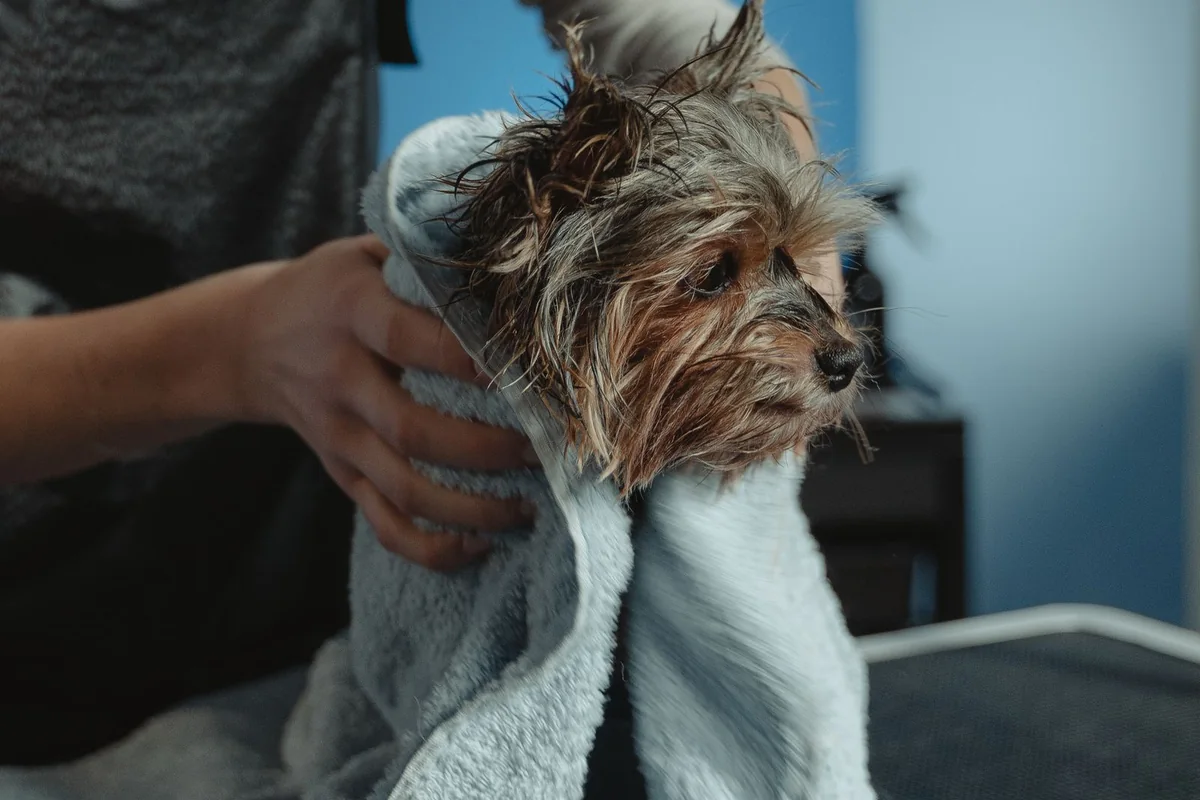
The dog has four wet feet. You have two hands, one of which is still holding the lead. Someone put the last dry towel in the laundry at breakfast. By the time anyone finds a replacement, the hall has a neat pattern telling you exactly where your dog went. Wet weather is easier to live with when the first stop after the door is already set up.
Put a grippy, washable mat inside the entrance and keep two clean towels within reach. Blot paws that are simply wet. Rinse away mud, grit or traces of ordinary winter road salt with lukewarm water before patting the feet dry. Build the habit on a dry day, when nobody has to hurry through the routine and your dog is more likely to accept a brief touch.
Give every arrival a place to land
Check that the outside door can close fully while you and the dog are on the mat. It should give the dog enough room to stand and turn. A low edge and a backing that grips your floor are the useful features. A mat that slides under a moving dog is uncomfortable even if it absorbs a great deal of water. If the hall is crowded, clear a small area past the place where people usually take off their shoes.
Keep dry towels raised on a hook, shelf or basket beyond the dog's reach. A small one is easy to use between paws and a larger one can catch rain off the belly and legs. Choose towels without loose threads if your dog likes to pick at them. A second hook can hold the towel that needs to dry after one use, leaving the clean one visibly separate.
Give yourself somewhere to put a wet umbrella and anything else that occupies a hand. If a basin is helpful, store it empty and out of the way until you need it. You want the most basic routine to work with the dog coming in alone with one adult at the height of a downpour. A bin by the mat can hold shoes and help keep the rest of the landing area clear.
Look at what came through the door
An ordinary walk through clean wet grass may leave the feet damp but free of grit. Use a towel to absorb the moisture around each paw and the lower legs. Clean the muddy route differently. If you see a layer of dirt packed between pads, gently loosen it with lukewarm water. A wet cloth works for a small area. Several dirty feet may be easier to rinse with a small jug and a stable shallow basin, provided your dog can stand comfortably nearby.
Change the water if it becomes gritty. Let water flow around the paw before you attempt to wipe. Rubbing sand or road grit into the surface can make the process unpleasant. Hold a paw low and close to its natural position, then return it promptly. If you can barely persuade your dog to stand near a jug, start with a clean damp cloth and seek help for ongoing handling difficulty.
During freezing weather, notice where your dog has walked through treated slush. The ASPCA recommends rinsing and drying after winter walks to remove ice, salt and de-icing residue. Check exposed fur along the lower legs and belly as well. If you suspect contact with an unknown chemical, petroleum product or something that may be toxic, prevent licking if you can do so safely and call a veterinarian or animal poison advice service promptly. Tell them exactly what you know about the exposure.
Teach the towel when the paws are already clean
Bring the dry towel to a familiar spot and let your dog investigate it. Reward an easy look or step toward it if you want to encourage interest. Without wrapping it around the dog, lay a corner of the towel beside a foot for a moment. Give a small reward, put the towel down and walk away together. This introduces what you are doing before any actual cleaning has to happen.
Over brief sessions, try a light contact near the top of a front foot, then a momentary blot. Let your dog put their foot back down each time. Many dogs can tolerate a short touch while standing. A dog that likes to lie on their side might prefer that position for one or two feet. The dog should be stable, comfortable and able to move away. A dog that stiffens, withdraws the paw sharply or stands up to leave may need a shorter step.
Ask other people to use a similar sequence. One common pattern is “on the mat,” a gentle touch, a reward, then a pause. Let the household agree on where the dog goes afterwards. If the dog heads for their bed, choose a route without a stair or strip of slippery flooring while the feet may still be a little damp.
Start with what can be done with all four feet down
Some dogs immediately shift weight away from a hand reaching for a paw. Use the absorbent mat or lay a dry flat towel securely over the grippy surface to collect some of the water while the dog stands. Blot the top of one foot while it is down. In a dog with comfortable handling skills, you can then briefly lift it to reach underneath. Keep the movement small, so the dog does not need to balance while you try to pull the leg toward you.
A larger or older dog may need to stand on the mat longer before moving. Give them enough room for the other three feet, and avoid taking a foot in the middle of a turn. If you share a tight entry path, ask the rest of the household to wait until the dog has finished. In a busy period, get the dog safely in and use a second grippy area with more room to finish.
Keep an eye on the cloth in use. Replace it when it becomes soaked or leaves visible grit behind. Pat around the toes where the dog allows, then make a short check around the foot. Very wet paws can leave the upper side of the mat saturated by the end, so dry the floor before somebody crosses the area in socks.
Separate ordinary dirt from something that hurts
A dog may pull away after getting a small piece of gravel lodged in the fur or hitting a sharp surface. If they are favouring a limb, allow them to stand comfortably and observe from a position that feels safe. You can rinse away loose surface dirt if they readily allow it. Avoid probing a cut or digging out an embedded object. Contact your veterinarian promptly if there is bleeding, swelling, marked limping, suspected injury, or a new sensitivity you cannot explain.
Look out for repeated licking or chewing of the feet, visible irritation between toes, or a change that continues on dry days. These can point to a problem that needs assessment. An occasional cleanup at the door might help you notice the change sooner. Your veterinary team can evaluate problems that would be difficult to distinguish at home. For animal-safe cleansing products or paw protection suited to an individual dog, ask the clinic what it recommends.
Skip household cleaning sprays, disinfecting wipes and harsh soaps on paws. Ordinary cleanup often works with water and a cloth. Fragranced products can leave a residue a dog will lick. When something will not come off with gentle rinsing, work out what it is and request appropriate veterinary advice instead of adding stronger products to the basin.
Build a smaller version for weather that catches you out
Keep a compact dry towel in a bag for the trip home from a park or for use at a second entrance. Lay it on a stable surface or use it while the dog stands on secure ground. If you have no rinse water handy and the issue is regular wet dirt, blot what you can and finish at home. A friend with the dog on lead can hold space around a safe standing area while you clear the floor of the car. Use your normal safe travel equipment afterwards.
When several dogs arrive together, finish with one at a time if that protects space. Put a familiar secure barrier between the dog being dried and any others waiting. Rewards and towels can become points of interest for a second animal. Keep the person working at the door focused on the dog in front of them. A towel hung low enough to be pulled down may need a better hook.
After a wet day, hang damp towels so air can move around them, and launder dirty ones as needed. Clean and dry the basin after use. Wash your hands when the job is complete. Keep one dry towel ready for the next walk, preferably before there is another reason to leave the house.
By the time the habit is familiar, the dog may pause on the landing mat before you have put down your keys. Most days the task is plainly finished after a few blots and a glance at four feet. The equipment stays in the same place, and the dog can get on with finding their own spot to dry.