A Better Walk Starts With Letting Your Dog Sniff
Turn a familiar route into a sniff walk with a softer pace, safer stops, and a few simple cues for moving on when you need to.
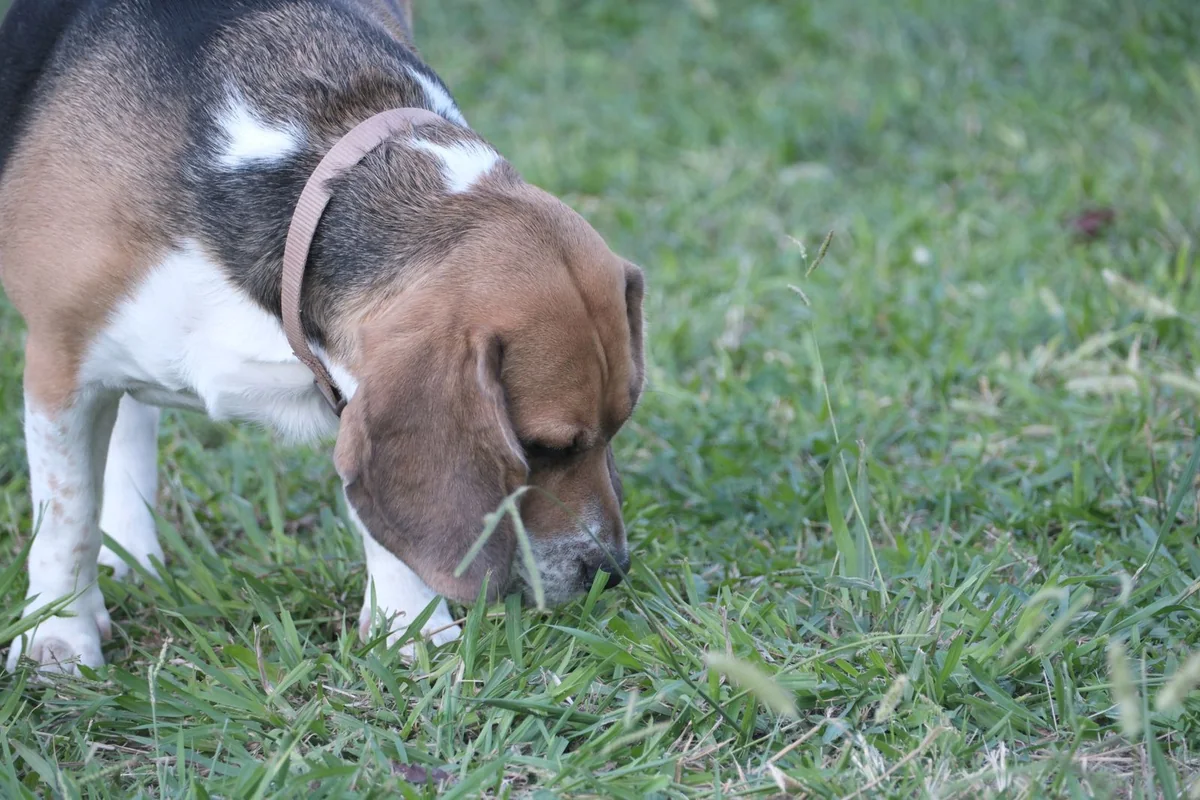
On a walk for distance, the crooked fence post two houses down barely counts as a landmark. On a walk with a dog, it can be the main event. Your dog might check the grass at its base, take a half step back, then return to the same patch from the other side. Meanwhile you have checked the time twice. A sniff walk begins when you decide you have enough time to stay for that half step.
For a simple sniff walk, pick a quiet stretch, give your dog room on a slack leash, and let them choose safe places to investigate. Decide in advance how long you can be out. You can turn around after one block and spend as much time walking as you would on your usual loop. A route with room to step aside usually works better than a trail that keeps you moving in single file.
Pick a stretch you can cross slowly
Start somewhere you already know. Along the broad side of a public park, you can often retreat from a noisy mower or change direction when a group appears. A strip of grass between a bike lane and moving traffic gives you far fewer choices. Watch what happens at the time you actually go. The street behind the library might be empty on a Sunday and full of delivery vans on a weekday morning.
An outdoor route also has invisible household rules. Check signs, local leash requirements, and any restrictions on playing fields or habitat areas. Stick to the public side of fences. Choose surfaces you can inspect without putting your dog close to a gutter or pile of discarded food. Skip areas with signs of chemical treatment and steer around wildlife or nests. You can keep the walk interesting by slowing down on a single safe verge.
Some dogs appreciate the same place every day. Familiar corners leave them free to investigate without also sorting out traffic patterns, people and barking. Other dogs get drawn toward unfamiliar surfaces or fresh odours. It is fine to offer a choice at a quiet junction. Let the answer be a change of direction or a pause. If the desired route ends at a crowded playground, take the wider path and supply an opportunity to sniff elsewhere.
Carry less tension in the leash
Use a well-fitted harness or your dog's usual secure walking equipment and a fixed-length lead that suits the surroundings. In a wide, open space, additional line can let a dog investigate without a person walking on their heels. Close to roads or other people, a shorter manageable line makes it easier to prevent an abrupt crossing. Leave some slack when your dog and the setting allow. A hanging curve in the line is a useful visual check.
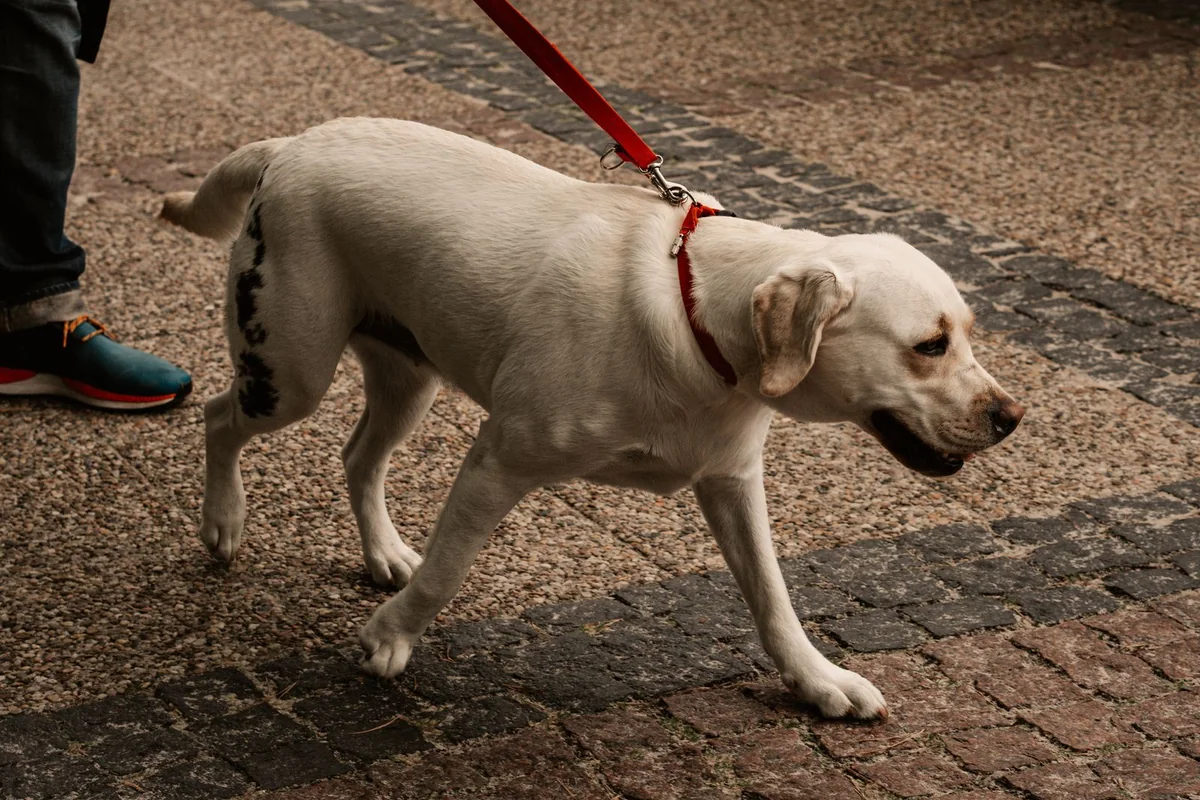
How you stand affects this more than you might expect. If your dog moves to the left and you stay on the right edge of the pavement, the leash can tighten even though nobody has pulled hard. Give yourself a stable place to stand, then turn your body toward the area your dog is exploring. Keep the line away from ankles and never loop it around your hand. Gather extra length as needed without hauling your dog away from the scent.
If you are struggling to hold a strong dog safely, begin in an enclosed area, or seek one-to-one help from a reward-based trainer. A long line on a busy path creates a hazard for you, the dog and anyone passing. On a shared walkway where you need to keep the dog close, treat that stretch as travel between safe sniffing spots. You can be attentive to other users and still build in plenty of choice for your dog.
Make two ordinary phrases do the work
A low-key phrase such as “go sniff” can give your release a consistent sound. On a calm stretch, wait for a loose leash or a spontaneous glance, then say it and walk together to a safe patch. Going to the patch is the part your dog values. Keep doing this when it is easy, so the words become associated with an opportunity your dog can actually take. The cue can be especially useful after you have passed a narrow gate or waited for a runner.
For the other direction, pick a cheerful phrase such as “this way.” Practise while your dog is between interests. Say it, take a couple of steps away, and reward movement toward you. At first, the next reward can be another safe stop a few steps ahead. Keep the phrase light. If it routinely predicts the end of the whole outing, you may find your dog less inclined to break away from a particularly good spot.
Sometimes a scent needs to be left immediately. A broken takeaway box or a piece of glass is a problem to move around, not a place to test a new cue. Use your equipment to guide your dog to a safer distance with steady movement. Reward the move as soon as you can. Give the line slack again once you have cleared the hazard. On the next outing, start farther from the area.
Notice what your dog is choosing
An exploring dog may pause, shift position, move forward, and return. Watch for that voluntary movement and for changes in the body. The dog can still be engaged even when a stop seems remarkably long to you. A dog standing rigidly with a closed mouth and eyes fixed on something approaching might need space. So might a dog that keeps glancing over a shoulder or tries continuously to get back to the car. Look at the whole dog and what is happening nearby before you decide what the pause means.
Try an informal comparison. At one spot, give the time you usually allow. At a second safe spot, wait until the dog moves or checks in on their own. Notice how quickly you feel the impulse to end the second pause. You may discover a useful clue about your own walking habits. If there is a risk that you will linger until you are late, choose an early turning point and set a quiet timer in your pocket.
Write down one small observation after a couple of walks, such as “stayed on the grass while the bin truck passed two streets away” or “moved on from the tree when I took one step.” Details like these help you choose tomorrow's route. They also show progress on walks where the distance did not change at all.
Adjust the outing to the day you have
On a short lunch break, walk to one promising place and stay while your dog searches the ground. Use the trip back to practise a friendly departure. If family members want a brisk walk too, agree on a sniffing stretch at the beginning or end. A small block of choice is easier for everyone to honour than an informal promise to slow down whenever the dog stops.
A senior dog might prefer a level patch beside home with good footing. In hot conditions, look for cooler times and shade and change the plan if the surface or weather feels unsafe. In rain, a sheltered side path can be preferable to standing below a gutter that pours onto your dog. Keep the pace and surface suitable for the animal in front of you. Sudden changes in movement, willingness to go out, or tolerance for activity deserve a conversation with your veterinarian.
A busy dog in a new place may race from scent to scent. Give them a simpler environment before asking them to hold still. If a familiar route remains difficult, look for patterns. A dog that pulls hardest near an entrance might do better starting at a quiet back corner. A dog that balks after passing a particular yard may benefit from turning before the yard. Match the environment to the skill the dog can offer today.
What if I still want to walk a proper route?
Mix the two kinds of outing. On a route with a destination, let the destination determine the schedule and plan a few breaks along the way. On a leisurely day, let the available time determine when you turn around. If you use the same entrance for both, wait for an easy check-in at the first safe patch and say “go sniff” when you have room to grant the choice.
Brisk walking, gentle movement, rest, play and exploration can look different across a dog's week. A brief sniff outing can be a pleasant option on its own. You can also stop halfway through a normal walk to give your dog an unhurried look at an area. Keep an eye on what helps your particular dog return home comfortably, as well as what is manageable for the rest of the household.
End the first walk while it still feels doable. Pick a patch near the turn for one last stop, cue the departure calmly, and head home. Over time you may collect a tiny map of favoured places: the seam in the stone wall, the shared tree at the turning circle, the patch of dry ground below an evergreen. Each time you go out, your dog gets a fresh look at a place you already thought you knew.