Loose-Leash Walking, One Easy Block at a Time
Help your dog walk with slack in the leash by rewarding the right steps, choosing easier routes, and making room for sniffing.
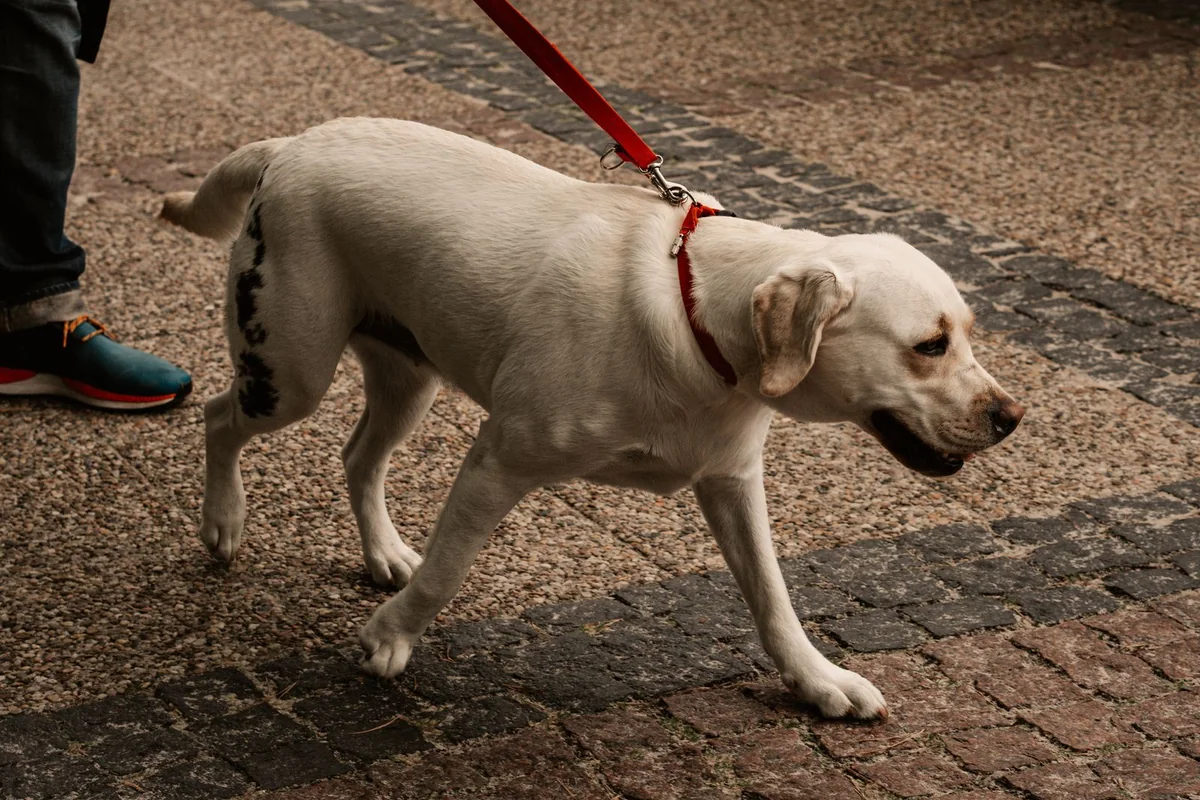
By the time a leash is straight between your hand and your dog's harness, two different walks are happening. Your dog is trying to get to the interesting part faster. You are trying to arrive with your shoulders intact. A loose-leash lesson gives both of you a shorter job: take a small number of steps that keep the line slack, then earn something worth stopping for.
Loose-leash walking means moving together without sustained tension in the line. It can happen with your dog a little ahead, a little behind, or alongside you, as long as the position leaves enough space for the setting. Start in a low-distraction place. Reward alongside you or offer safe access to a smell, and practise in shorter stretches than you think you need.
Begin before the front gate
Clip the leash on somewhere with enough room to turn. A hall with a clear run of floor or a quiet enclosed yard works well. If your dog is excited by the clip, stand quietly and let there be a little time between putting the equipment on and heading for the exit. Make sure the harness fits securely and allows comfortable movement. A fixed-length leash that you can handle without winding it around your fingers makes it easier to feel what the dog is doing.
Put a few small rewards in an accessible pocket. Take one step. If the leash stays slack and your dog comes with you, say a brief marker such as “yes” and deliver a treat near the seam of your trousers. Feeding there gives the dog a useful reason to return to your side. Hold the treat low enough that the dog can take it comfortably. For a small dog, that may require you to bend.
After a few repeats, take two or three steps before rewarding. Change direction in an easy curve. The point is to notice the moment your dog moves with you and pay that moment while the two of you still have room. If you can only do one step at first, collect three or four of those single steps and then give both of you a break.
What to do when the leash goes tight
When the dog pulls toward something safe and you have room to wait, slow down or stop, keep your hand close to your body, and allow the dog an opportunity to loosen the line. The moment you see a shift back or a turn toward you, mark it. Reward close to you or begin moving again. Be ready so the dog gets feedback while making the helpful choice.
Near moving vehicles, when another dog approaches, or if you are at risk of being pulled over, prioritise leaving the situation. A gentle turn and a safe distance give you far more options than a contest near the kerb. If needed, yield a short distance along the path to get to an open space, then turn. A harness and leash are safety equipment. There will be times you need to use them to guide your dog away without waiting for a training response.
Try to interrupt the pattern before it begins. Suppose you notice your dog's ears change as you approach the tree at the corner. There is your moment to slow down, offer a reward by your leg, and ask for one more good step. Once the line goes tight repeatedly at exactly that tree, move your practice start back by several metres. The further-back starting point lets both of you rehearse the approach at a pace you can sustain.
Let the destination pay for the approach
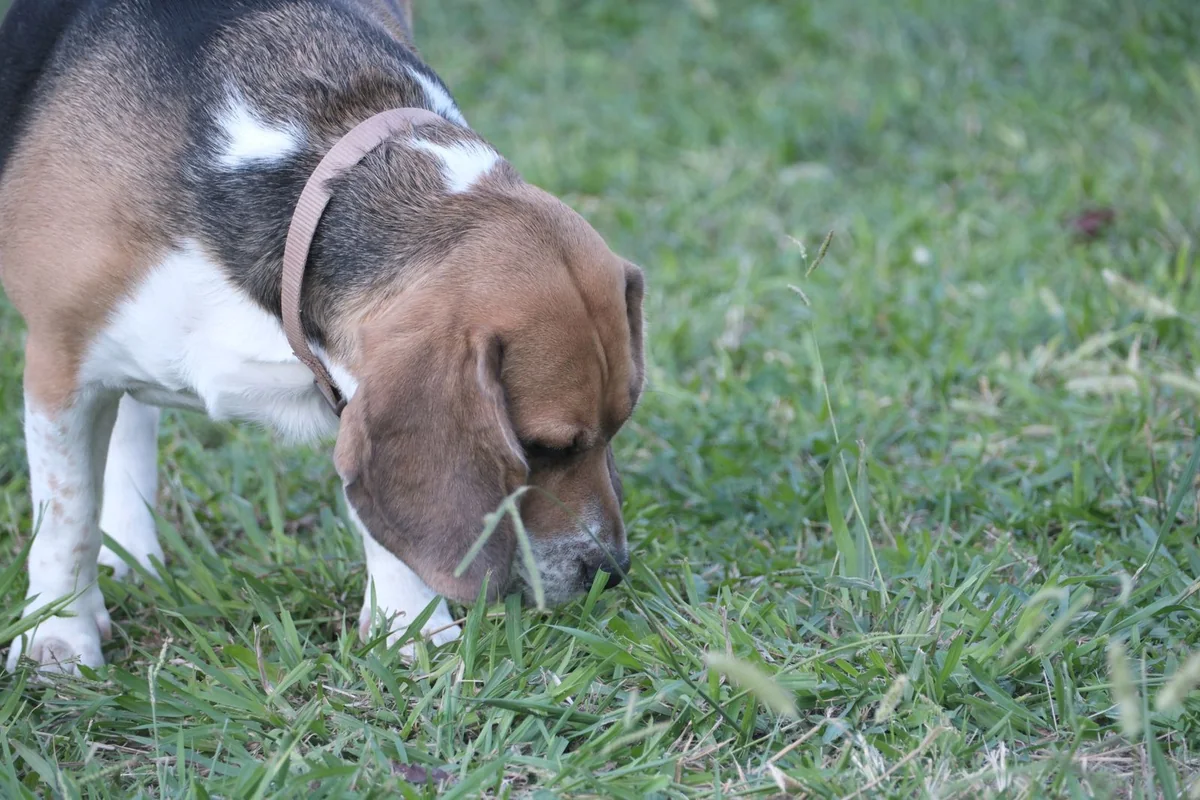
The verge is often a better reward than whatever is in your pocket. While the path is clear, walk toward a safe patch of grass. Mark a couple of slack steps and say “go sniff,” then follow your dog to the patch. On the next approach, take fewer steps if needed. Keep the leash slack during the release so that the dog can distinguish the opportunity from a sudden lunge into the grass.
Use the pattern at various distances. At first you might start only two steps from the patch. Over several walks, you could begin at the far end of a driveway. If the dog has been sniffing and is ready to leave, guide away with a cheery cue and reward the first step together. Find a second patch where you can release them again, so that leaving one interest sometimes leads to another.
Random rewards can be useful after a behaviour is established, but during early practice your dog benefits from clear, frequent feedback. If you have two rewarding stops in a short block, aim for quick feedback in between too. You can gradually cover more ground once your dog regularly finds the pace and position that work.
Practice routes are allowed to look odd
One useful route goes from your door to the end of the path and returns. Another goes to a quiet corner, turns around, and crosses the same piece of pavement twice. You can also travel to a quieter area if the street outside your house has too many distractions. Pick a location with sightlines, useful exits and space to adjust your distance from things your dog cares about.
Keep three stretches in mind on any outing: the easy start, the part where you use what you have, and the place to take a break. A quiet driveway makes a good start. The busy pavement in front of a café is probably a travel section. The trees beyond the café might provide time to sniff and reset. You can practise twice on a walk without making the entire walk a lesson.
If you go straight from a place the dog knows to a busy park, temporarily pay for much shorter stretches. Quiet-sidewalk success tells you the dog understands the pattern in that environment. People, squeaking toys, and nearby dogs can make the same pattern much harder. A couple of easy repetitions near the edge of the park may be sufficient the first time.
Prepare for the distractions you can see coming
Let distance protect your practice. When someone is approaching with an exuberant dog, step onto a safe wider area or turn down the nearer side path. Reward your dog for moving with you. You can teach a cheerful turn by saying “this way,” turning smoothly and treating after the dog has followed. Rehearse somewhere quiet so the first turn is familiar when you need it.
If the dog holds a stiff posture, lunges frequently, or cannot take a familiar treat around another animal, make the situation easier and put some space between you. Holding a dog close and waiting for them to give in can leave everyone stuck in the hardest part of the encounter. If you are avoiding your usual routes out of worry, choose quieter exercise and ask a qualified reward-based trainer for help. Sudden changes in calmness, walking pace or willingness to be handled can also be a reason to contact the veterinarian.
An ordinary human stride may be fast for a tiny dog and slow for a long-legged one. Watch how often your dog needs to speed up or shorten their steps. A physically comfortable pace gives you a fair starting point. Some short-legged dogs can walk more freely if you slow slightly. A taller dog might do well with a brisk stretch that alternates with deliberate sniffing breaks.
Help everyone use the same rules
One handler might release the dog at every tree while another expects three steps by their knee. Both can keep a safety margin and reduce pulling if they agree on a few details. Pick the same marker and movement cues. Agree to offer opportunities for sniffing. Use reward placement near the leg during practice. Give anyone new to the dog a demonstration before a busy outing.
People can also practice using the lead without the dog. One adult can hold the end while the other walks a short course. The person holding the handle can learn how many steps it takes before the line becomes tight, how to gather line smoothly at a turn, and where to position a hand to deliver a treat. Include children only with adult supervision and an adult actually controlling the dog on walks.
If someone returns home saying the lesson went terribly, ask where in the route it fell apart. Did the dog start pulling on the stairs, near a neighbour, or at the crossing? This is information about the setup. Test a smaller version and see whether it changes the next outing.
Count something that matters
Take an informal baseline on a quiet stretch. Count how many comfortable steps happen before the lead tightens. Repeat after a few days of short practices. Also watch how quickly your dog comes back toward you once the leash goes taut. A dog that previously stayed at the end of the line may begin returning after a glance or change in pace before the raw number of slack steps increases.
Choose your next goal from what you see. If you can cross the driveway, try adding its pavement seam. If the turn works on an empty lane, practise where a person is visible at a distance. If two people can handle the dog comfortably, take your regular short route with both of them so they can see when the session should end.
The result eventually feels ordinary. You approach the verge together, the leash droops, you grant a pause and carry on. You still notice a sudden squirrel. You also have a few easy ways to move together after it has gone.