Rainy-Day Games for Dogs Who Miss the Outdoors
Make a wet afternoon more interesting with easy scent games, quiet movement, and supervised play suited to the space you have.
What a dog misses on a wet afternoon could be a round of play, a chance to check the street, or the slow walk after lunch that makes the rest of the day predictable. Before getting out three toys at once, see which part seems to matter. A dog who brings you a ball might be ready to move. A dog who keeps wandering back to the entrance could be due for a toilet break. A dog with both needs met might only want a small job and a place to dry off.
Feed part of an ordinary meal through a simple indoor search, use a clear stretch of floor for several minutes of low-key play, then let the dog decide whether to rest. Start with familiar objects and make the first search easy. Stay close enough to intervene if the dog starts swallowing materials or pieces of a toy.
Dry off first and get your bearings
There is little point hiding treats in the hall while a dripping dog wants to shake. A towel near the door makes the transition easier. Put it on a hook or closed shelf when it is dry so it stays clear of feet. Let the dog stand on a grippy area while you pat off rain if they enjoy the contact. In the case of a dog who avoids towels, use gentle, brief touches or give them a place to dry by themselves.
Keep routine toilet trips available in safe weather, even if an ordinary walk is shorter. Some dogs need a little extra time to go when rain changes the sounds and smells of the yard. A sheltered location with decent footing can help. If a dog is declining to go outdoors at all, give them frequent low-pressure opportunities and watch for discomfort or difficulty toileting. Call your veterinarian if you are concerned about a change in normal function.
Move the clutter before setting up indoor play. Wipe wet tiles, remove charger cables, and block access to furniture gaps where toys or treats disappear. Pick a single room with enough space to turn and enough traction to stop. If you live with other pets, provide separate activity spaces. A second animal searching the same floor changes an easy game into a resource issue for some dogs.
Search one doorway at a time
Put a few pieces of safe food on a dry, clean patch of floor with your dog watching. They can come over and collect them at once. As this gets easy, spread the pieces a little further apart and leave one beside an obvious stationary landmark, such as the leg of a chair. For a dog who eats very fast or gets frustrated easily, use only a few pieces and give them time to finish. Count these pieces as part of their daily food or treats.
Next, put one piece just around the corner of an open doorway. Stay in sight and keep access clear. You can give a cue such as “find it” before the dog starts, but stay quiet during the search so they can work without constant directions. If they get stuck, point near the item or make the next placement more obvious. The dog can gain practice by repeating a simple success.
One useful variation gives your dog nothing new to chew. Hide a regular toy just inside a second doorway. Let the dog see the edge of it, then say the name you normally use for it. End by playing briefly together if the dog brings it over. In the next round, let a smaller part of the toy remain visible. Use something large enough that your dog cannot swallow and check the condition before you start.
Try a paper game only if your dog leaves paper alone
An open cardboard box can serve as a single easy search area. Remove tape, staples, tags, and any handles. Place a treat on the floor of the box where the dog can reach without climbing in. If that is easy, put an unprinted loose piece of packing paper to one side, leaving the food visible. A confident dog can move the sheet slightly to find the reward. A worried dog can have a clear floor version instead.
Supervise closely. Stop if the dog tears and tries to swallow the paper or begins chewing the box rather than searching. If you know they eat household materials, work with a suitable commercial puzzle or hide food in open, scan-friendly places in the room. A familiar food toy can provide an option for a dog who would pull fabric threads out of a mat.
Check whether the design is still fair when the dog is excited. A box that skids across a tile floor or folds over the dog's head may be more startling than interesting. A long towel rolled tightly can become a frustrating project. Make the search shallower, slow the game down, or switch to an easier setup. Move away from an item before picking it up if your dog tenses when someone reaches toward it, and ask a reward-based professional for individual guidance if guarding is a concern.
Use movement that belongs indoors
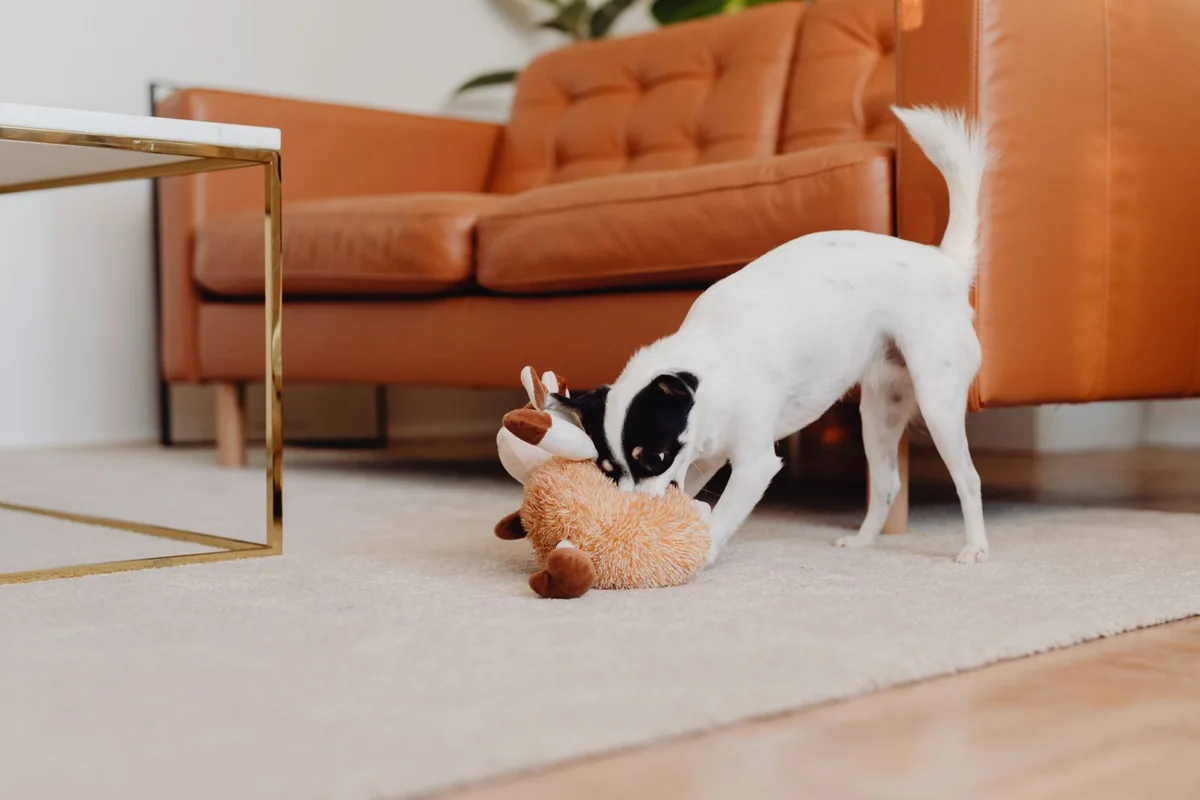
If your dog wants to move, think of a class in the living room with only two pieces of equipment: their favourite toy and the rug. Roll the toy a short distance along the grippy surface. Let the dog bring it back or settle with it. If a tossed toy makes them sprint into a wall, keep it low and close. Skip airborne jumps and sharp turns on a small area of floor, especially with a growing, older or mobility-limited dog.
A slow follow exercise suits some households. Walk a simple loop around a chair that cannot tip, then reward your dog for following your route. Change direction gently on the next loop. You can also practise returning to a rug and resting for a short pause. For a dog unused to indoor practice, two or three turns are enough to learn what happens next.
A brief tug game can work when your dog likes it and the toy is appropriate. Keep the movement smooth and near the dog's natural head height. Put the game away when either participant becomes tired or less coordinated. If you already use a release cue, trade for a reward and sometimes restart the game. This preserves a useful way for both of you to take a breather.
Let the room get quiet again
Keep a visible end to the activity. Pick up leftover food, return the toy to its place, and refill the water if necessary. Let the dog go to their bed or to another safe resting spot. Some dogs will stay near you a minute longer, checking whether another round is coming. Give them time. Remaining still at the end of the session is a skill for the person as much as for the dog.
Wet weather can change who else is home and where they spend time. If several people keep calling the dog back to play, agree on a rest space or on a quiet part of the day. Children who want to help can place one treat while an adult holds the dog at a distance. An adult can observe the search and stop the game before a dog starts jumping or racing. Put play materials and any bag of rewards well out of reach afterward.
There is room for a small shared activity after a search, too. If your dog likes handling, a brief gentle brush on a dry coat is one possibility. Sitting together while the dog rests is another. Notice what your dog freely chooses after the games. A short return to the window may be enough before a nap.
What can I set up when I have only ten minutes?
Clear a grippy patch of floor and set out a few pieces of food from the next meal. Let the dog look for one round, then place the rest of the meal in the usual spot. If you have time afterwards, guide your dog out for a toilet break once the weather lets up. There is little cleanup beyond checking that the entire search area is clear.
For a longer stretch indoors, prepare one activity in advance but leave the second one open. Your dog may solve a search and then spend twenty minutes watching the rain. If they come back with a toy later, join them on the rug for a short game. Choose the activity by what they offer at the time rather than trying to fill the whole afternoon in advance.
If the rain arrives with thunder that frightens your dog, change gears. Let them move to their chosen sheltered place and deal with sound and comfort first. Keep outward doors and accessible windows secure in case a sharp noise prompts a dash. Save the search game for a point when the dog is able to get involved willingly. When storms regularly cause distress, a veterinarian can help you plan support ahead of the forecast.
A pleasant wet day can be small. A few careful minutes with a meal, a turn around a chair and an unhurried search behind an open door are genuinely different experiences from wandering between the same windows. Once you know which of those your dog enjoys, you can put that one back in rotation on the next rainy afternoon.