When to Let Two Dogs Say Hello Outdoors
Read the space, the leashes, and both dogs before a greeting, and learn a comfortable way to pass when either dog needs distance.
You and another walker are approaching a narrow gap between a parked van and a hedge. The other person says their dog is friendly. Your dog is now standing still. The only available place to go straight ahead is also the place where the two dogs would meet nose to nose. Whatever the other dog is like, a polite “We'll give you some room” is enough reason to wait or turn around.
A good outdoor greeting depends on both dogs and both people choosing it. Look for a spacious place, loose movement, handlers who can manage the leashes, and an easy way for either dog to leave. If those pieces are missing, pass at a distance or turn away. A dog can have a pleasant walk without greeting another dog at all.
Let the setting make your first decision
Look across the path before interpreting the dogs. A shared lift, alley, or narrow bridge leaves little space for an animal to move away. A pedestrian with a pushchair may have nowhere to go if you stop. A quiet area of open pavement gives everyone a clearer route and lets you keep the leads at useful lengths. In a designated on-leash area, leave both dogs leashed and follow the signs.
Consider the ground. Ice, steep banks, and loose gravel can make an enthusiastic first move difficult to handle. At a sharp bend, you may not see a cyclist coming past. If a leash is dragging or an approaching dog is running without a handler nearby, increase distance rather than standing still to evaluate the greeting. The goal is room to choose.
Approach along a curve if both people have agreed and the dogs are already comfortable moving in the same general direction. A curving movement across a wide patch is easier to interrupt than a direct line along a pavement. Leave the leashes short enough for safety but allow a little slack, and stay aware of where your own feet and the other lead are. Decline when you cannot manage both.
Learn to see a change in the whole dog
A tail wag gives you one piece of an interaction. Compare it with the dog's posture, speed, and response to the environment. A dog who moves fluidly, takes an arc, pauses briefly and can look away has a different set of options from one that fixes its gaze, leans forward and holds its body stiff. Some dogs show tension by becoming very quiet. Others become noisy or bouncy.
Notice whether your dog is creating distance. A move behind your knee, a pause followed by a turn of the head, or a step toward the edge of the path is reason to make an exit available. A dog who appears eager at first can change their mind when the other dog gets closer. Your job is to notice the later signal as well as the first one.
Read both dogs, including the quiet one. It is easy to focus on the dog straining at the leash and overlook the one taking half steps back. If you cannot see both easily, wait. The handlers' skill matters too. One person holding a set of shopping bags and two leads may have trouble moving smoothly even if their dogs are ordinarily sociable.
Buy time with one useful sentence
Use words you can get out before the other walker arrives. “We're going to pass on this side” tells the person what you are doing. “Could you give us a moment to turn?” gives them a useful job. You can simply say “No greeting, thanks” when there is little time. Keep moving toward the exit you chose if the other person tries to discuss it.
If you see the encounter coming, put your dog on the side of you farther from the other animal and create a wide arc where the route permits. Reward the dog for turning or walking with you. If you use food, keep it by your leg and give other dogs space, especially if proximity to food is a concern. The other handler may not know your dog, and they may be watching traffic or their own leash.
A quieter side street or safe driveway entrance can give you a place to wait. Choose a legal public place clear of vehicles, and stay out of the way of anyone coming through a gate. Some teams do better walking away immediately. Others can wait at a distance while the dog watches and takes an easy reward. Experiment when the stakes are low so you know what is useful with your own dog.
Keep an agreed greeting brief and easy to leave
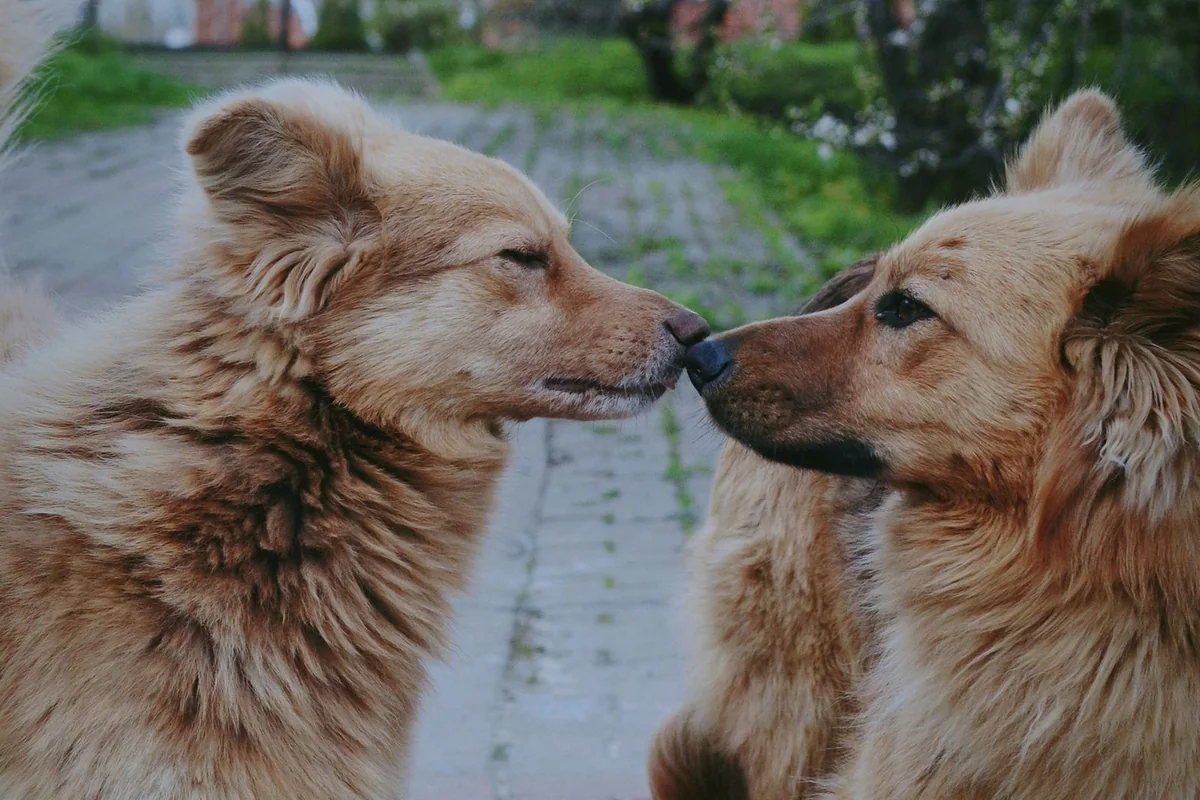
If both handlers have chosen to proceed and both dogs can stay loose, let the dogs approach without tightening the line or pushing them toward each other. Allow a short exchange and then cheerfully invite them back to their handlers. Reward the departure after creating a little distance. If both dogs stay comfortable and space allows, you can decide together whether it makes sense to continue walking near one another.
Watch the leads every second during a close interaction. If one winds around a dog or a person's knees, even a small sideways move becomes hard to interrupt. At the earliest sign of tangling, create space calmly. Leave active play for a setting that is suitable for the dogs, legally permitted, and safely enclosed where appropriate. A footpath with leads crossing is a poor place for two dogs to start sprinting.
One dog might remain curious after the other is ready to leave. Help the interested dog move away with you. A reward can help them follow. If your dog approaches too quickly or jumps, reduce the difficulty of the next encounter. You can rehearse a calm check-in at a greater distance without attempting another introduction on the same walk.
Use a parallel walk for a dog you expect to see again
When a friend has a dog you would like yours to know, arrange a short walk in neutral, spacious surroundings. Begin far enough apart that both dogs can walk with their handlers. Stay in the same general direction rather than bringing them together at the trail entrance. Build in an easy exit for each person. If you find a route with two clear paths, you can talk and still give the dogs a great deal of room.
Watch the dogs over a few minutes. If either appears tense or has trouble following their handler, use more distance or end the outing. If both can walk comfortably, you have already had a useful session. You can repeat the pattern another day. A greeting may emerge from the routine once both dogs have room to choose. For dogs with serious fear, a history of biting, or hard-to-manage reactions, ask a veterinarian or qualified reward-based behaviour professional to help plan introductions.
Puppies deserve thoughtful introductions too. Ask your veterinarian what environments are suitable for your puppy's vaccination status and local conditions. Choose calm, available partners and avoid pressure to meet every unfamiliar dog. Watching another dog from a comfortable distance can be an experience in itself. You can also give a puppy a break after a meeting rather than immediately looking for another.
Take particular care when two dogs differ in size, mobility or age. A lively adolescent can overwhelm a smaller animal with one sideways bound, even when both initially seem friendly. Give a slow dog an unobstructed route out. If the proposed meeting would require you to pick a dog up and present them at nose height, postpone the greeting and keep both dogs on the ground at a comfortable distance. They can share some of the outing without direct contact.
What if another dog keeps closing the distance?
Use a clear request for the handler to call or collect their dog. Move away on a safe route if you can. Having a second adult can help because one person can scan for the exit while the other focuses on the dog. Avoid putting your hands between dogs in a fight. If there has been contact and an injury is possible, recover to a safe place and ask a veterinary professional what care is needed. A bite to a person warrants medical attention.
Once everyone is safe, make a small note of what happened and where. An off-leash dog regularly leaving a particular driveway may make another route a sound choice. If the incident was at a park, you can check its rules and report a recurring safety issue to the appropriate local authority where relevant. For your next walk, start in familiar surroundings and give the dog more room than usual.
In places where you often pass the same walkers, a quick agreement can make life easier. If two dogs both need distance, the first person to notice can take a familiar turning and the other can give them time to clear it. You may be able to talk over a comfortable gap once the dogs are doing their own thing again. A regular neighbour can be an excellent partner for practising safe, uneventful passes.
Over time, you may settle into a fairly modest standard. A dog who can glance at a stranger and follow you along a wide path has learned something valuable. A dog who greets one familiar friend and passes everyone else is getting a balanced day. Measure progress in comfortable choices and easy departures. Those are two things you can build on every time there is an unexpected dog on the path.