Make Room for Puppy Naps
Read your puppy's everyday tired signals and design a low-pressure nap rhythm that leaves time for toilet trips, play, and quiet.
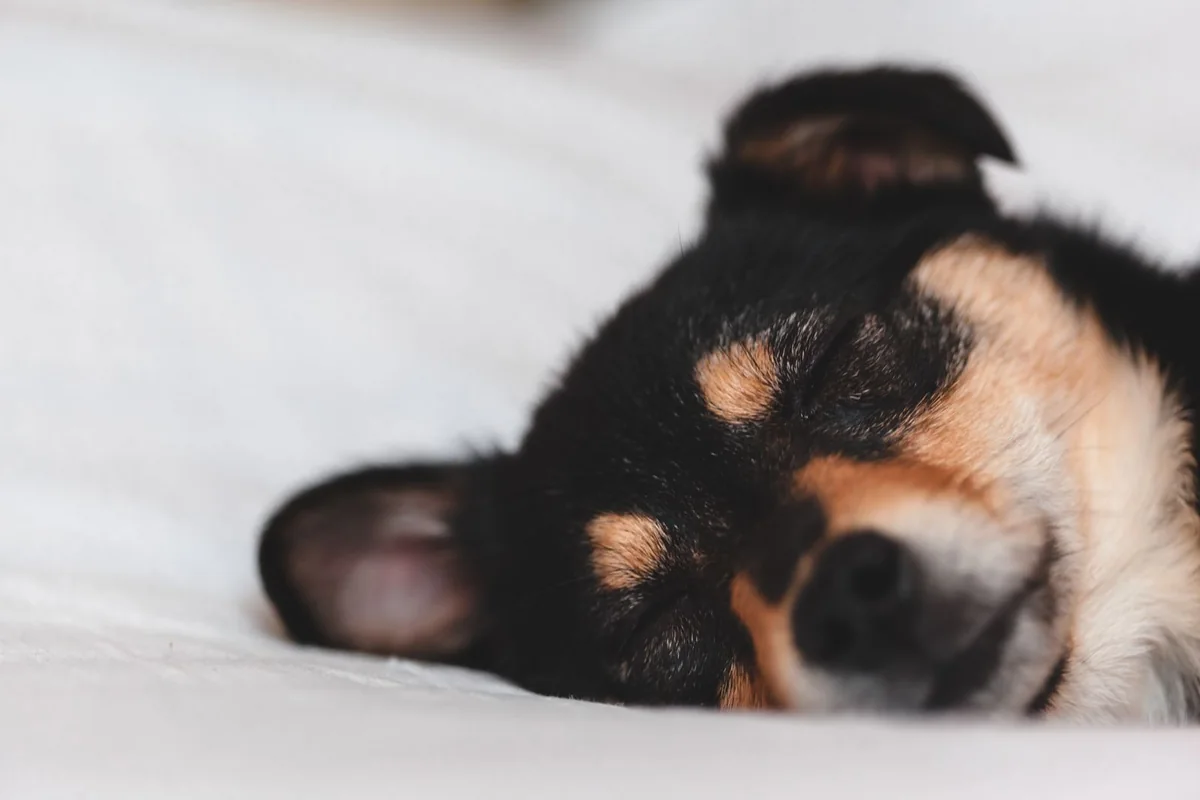
A puppy can be asleep under your chair and fully awake by the time you stand to wash a plate. Ten minutes later, they might be carrying a shoe away by one lace or hurling themselves sideways at the laundry basket. Keeping up with that switch takes practice. A predictable place to rest helps you catch the useful window between one bout of exploration and the next.
Build your puppy's day around repeated opportunities to toilet, eat, play, and rest. Watch how your own puppy behaves as an active spell winds down, then lower the noise and help them reach a comfortable resting place. Puppies differ by age, health and previous routine. Their behaviour across the day will tell you more about the timing than a strict schedule alone.
Keep the first notes simple
For a few days, jot down when your puppy wakes, goes out, starts a lively activity, and settles. Round the times to whatever you can remember. Write the setting too. A morning spent with two adults talking quietly has a different texture from a morning spent waiting for the washing machine repair. It is more helpful to notice the difference than to keep a chart accurate to the minute.
You may recognise signs that come before a nap: losing interest in a toy, returning to your feet, moving more awkwardly, or seeking a quiet corner. Some puppies get busier first. They grab cuffs, switch rapidly between objects, or struggle with an easy cue. Those actions can have other causes, including play or a toilet need. Look at the last few things that happened and offer an appropriate break.
After sleep, give a puppy an early chance to use their designated toilet spot. Take them there calmly with suitable supervision and equipment, then reward success. Ask your veterinarian where a young puppy can safely go while their vaccination plan is in progress. If a puppy begins having accidents after a period of progress or seems uncomfortable toileting, seek veterinary advice.
Set up a rest spot the house can live with
Choose a place away from a busy doorway, where the air and floor temperature are comfortable. It may be a supervised puppy-proofed area with a washable bed, or a familiar crate or pen introduced positively. A puppy who can choose between a slightly cooler surface and a softer one may settle more readily. Keep cables, loose threads, swallowable objects and chew hazards out of reach.
Sound travels differently near the floor. A spot tucked under a kitchen counter may seem out of the way from above and still sit next to the loudest appliance in the room. At floor level, look for draughts and constant foot traffic. Try sitting beside the proposed place for a few minutes during the period you expect your puppy to nap.
Some young puppies rest better with someone nearby, particularly during the first nights in a new home. Let that proximity help you start. Over time, give the puppy safe chances to relax while you sit a little farther away or attend to a quiet activity. If the puppy regularly becomes very distressed at separation, get advice from your veterinarian or a qualified reward-based professional.
Keep rest flexible after exciting outings
An unfamiliar guest, a training class, or a brief outing may make the puppy ready for a quiet stretch earlier than usual. Give them a chance to toilet and drink, then reduce the activity at home. You might sit nearby with your own task and let the puppy choose their resting position. Even a small guest visit can be more eventful for the puppy than it was for the adults.
If your puppy seems wide awake when you expected a nap, see whether they can explore safely for a little longer. Offer something familiar rather than beginning another complex activity. Once the puppy slows down, you can dim the room, close an inside door to reduce sound, or move your own conversation elsewhere. One household might manage this with a shared quiet hour. Another might use a separate space.
Avoid packing every waking minute with lessons. During a short active spell a puppy might practise a friendly approach, look at an ordinary household object, or play for a few minutes. Pause early. If they take a drink and wander back to their mat, let that be the end. Leaving some free time can make it easier to observe what the puppy needs next.
Practice quiet without demanding sleep
Start while your puppy is awake but fairly relaxed. Sit close to the bed or pen and let them choose to investigate. Place a piece of their own food inside if suitable. Leave any door open while they are learning to go in and out. As the setup becomes familiar, try a brief closure with you right there, then open it while the puppy can remain comfortable.
For crate routines, remove equipment that can snag and confirm that the size, ventilation, location and duration suit your dog. Use a resting space large enough for comfortable movement. Follow a plan that includes regular toilet opportunities, water and interaction. If you cannot give a puppy enough breaks while you are away, arrange help rather than expecting a new bed or pen to solve scheduling needs.
Look at the distinction between settling and being very still. A puppy who rolls onto one side and gradually loosens up is in a different state from one crouched with eyes wide and ears pulled back. Persistent vocalising, efforts to escape or inability to eat a familiar reward are reasons to pause and reconsider. You can stay closer, use a less confining space, or get help with a gradual plan.
Agree on what to do when the puppy wakes
A puppy can shift position, twitch, or open their eyes briefly and return to sleep. You do not need to engage with every movement. If they clearly stand up ready to leave, guide them for a toilet trip before getting involved in play. Keep essential trips at night quiet and short so the household can return to rest.
If the household includes children, explain how to recognise that the puppy is resting and ask them to call an adult if they want to interact. An adult can set up the quiet zone and supervise wakeful contact. Have visiting relatives and friends follow the same rule. A puppy does not need to be picked up because people have come to see them.
On a noisy evening, everyone can wait for a natural break to offer the next activity. If the puppy falls asleep in the living room, manage feet and furniture around the resting spot. When that is difficult, invite them to a safe alternative while they are awake. Getting the move in early can save a tired dog and a busy family from sorting it out later.
Make a backup for the awkward part of the day
Late afternoon often has several needs arriving together. Someone gets home, dinner starts, and the puppy hears two people talking in the hallway. Start with the immediate things, such as going outside and checking what is happening at the door. Give the puppy an appropriate few minutes of company while the household puts away keys and bags. Then look for a stretch with less movement. One adult can sit near the resting place while the other takes over the noisy part of dinner.
If your work schedule changes from day to day, use a familiar sequence instead of chasing the same clock time. After the first waking stretch, toilet and food occur where expected. Play can end with a drink and a quiet moment on the same bed. Someone caring for the puppy at lunchtime can follow the same sequence even if they arrive fifteen minutes earlier. Agree on details that affect safety and comfort, including the toilet spot and which gates need to stay secured.
There will be days when the puppy sleeps lightly because an appliance is running or a new person is in the house. You can arrange a second short opportunity to settle after the interruption. If they keep moving back toward the same busy area, check whether someone there is repeatedly engaging them. A little coordination among the people can be more useful than a different set of rules for the puppy.
How do I know whether to adjust the plan?
Look again at your notes after several days. If your puppy falls asleep quickly in the late morning and struggles after dinner, compare the amount of movement, company and noise in each period. A puppy who is ordinarily relaxed in an open area may find the same place difficult when dinner smells make everyone pass through. Try a quieter setup for the harder spell and watch what changes.
Call your veterinarian if the puppy seems unusually drowsy compared with their recent normal, is difficult to rouse, or has a sudden decline in appetite, interest or movement. Seek prompt advice for signs of feeling unwell. An unusually sleepy puppy with other symptoms needs individual care. A familiar routine also helps you explain to the clinic what changed and when.
Your puppy will eventually have their own recognizable way of finishing a busy spell. They may carry a toy to the bed and forget about it, pick one patch of cooler floor or give up halfway through walking back to you. Once you can see that moment arriving, the next move becomes fairly simple. Open the quiet space, check the basics, let the household activity soften and give the puppy a chance to switch off.