Arrange Bird Perches Around the Routes Your Bird Uses
Place companion bird perches for easy movement, clean food and water, stable resting spots, and room to stretch without hitting obstacles.
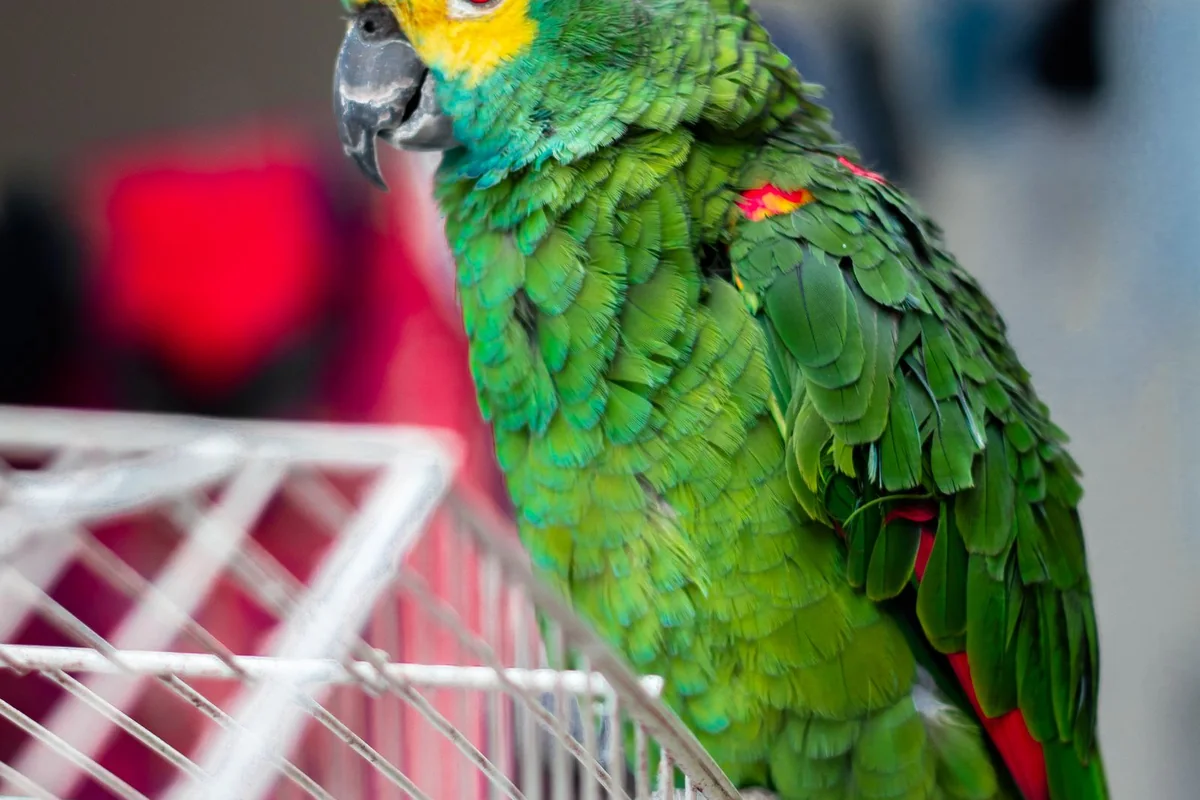
Look at the perch a bird uses just before it goes to a food dish. That small piece may be the most important landing spot in the enclosure, carrying a series of ordinary trips from eating to resting and back. If it is unstable or in the way of another bird, a healthy-looking layout can interrupt daily movement many times over. Give perches jobs on the map before deciding where to add them. An open space can be just as valuable as the next branch.
Housing size comes first. A cage or enclosure should suit the species, allow safe movement and wing extension, and hold usable furnishings without filling essential space with them. Different birds use different horizontal and vertical routes. Ask an avian veterinarian about housing, perch sizes, safe materials, and adaptations for your species, especially if an animal has limited mobility or has recently had an injury. Start with the routes a particular bird can use today.
Draw three trips through the enclosure
Take a sheet of paper and mark the stable resting place, the usual food and water sites, and the door. Follow the bird through three trips you actually see. One bird may fly across an open center to reach food. Another may climb most of the way and hop once at the end. Draw only the perches and structures used for these trips. If the expected path and actual path differ, examine the actual one to find what makes it easier.
Leave a generous path through the center for flight or other usual movement, according to the enclosure and species. Watch the bird's tail during a turn and its wings during a landing. It may land perfectly and still brush a dish behind it every time it turns around. Check clearance on both sides of each useful approach. Where possible, build a route with room to take off or move away in more than one direction. A clear path can become obstructed when a toy swings into it or a door opens across it.
If several birds live together, watch the positions that each actually uses. Make separate places to rest, and arrange access to food and water so birds can eat and drink without going past the same contested spot. Larger-space considerations and species compatibility deserve their own assessment. If tension is a regular feature of feeding time, bring in an avian veterinarian or qualified bird behavior professional. Perches can improve paths, but the way birds share space may need more than a new landing point.
Choose surfaces the feet can use comfortably
A secure perch can have different textures and diameters along its length. Suitable natural branches offer variation when sourced responsibly from known bird-safe wood and properly prepared. Check any branch with an avian professional if you are uncertain about its identity, treatments, or source. Never use wood from somewhere that may have been sprayed, contaminated, or coated with an unknown substance. Choose bird-safe commercial perches when you need a more predictable source.
Evaluate the actual fit for your bird. Watch the foot from the side while the bird perches naturally, as well as how it grasps and releases the perch. A useful resting spot lets it stand comfortably without excessive stretching, sliding, or constantly changing position. Birds with special needs may require a stable platform or another adaptation recommended by the veterinarian. A setup that worked well when the bird was younger can become difficult if its movement changes.
Inspect surfaces and attachments before bringing a new item inside. Abrasive sandpaper-style covers can injure feet and are unsuitable. Avoid material that frays or has loops that can catch nails. Look for coatings that can chip as well as exposed fasteners or accessible metal of uncertain suitability. Ensure the perch is firmly supported and cannot twist. Test for play in its connection from the outside and use appropriately sized hardware. A good branch loses its value if the bird has to balance against a pivot each time it lands.
Keep everyday services out of the drop zone
Stand in front of the enclosure and imagine a vertical line down from each regularly used perch. Keep food and water out of the path where droppings and chewed debris often fall. A favorite high perch can stay in place while a dish moves sideways, provided the alternative remains easily accessible. The goal is clean resources and a comfortable place to stand while using them. Check the enclosure after a full day to see where droppings and food debris actually fell.
Set up dishes so you can reach them without pushing a perched bird aside. A change in position may let you rinse and refill from outside the usual path to the door. If a bird moves anxiously every time a cup is removed, identify the direction of your hand and the available route away. Moving the approach perch a short distance or adding a stable landing option can make service simpler. Preserve easy access to each dish during any change. Watch a bird use the new position before deciding that the move is finished.
Consider whether a nearby play item leaves pieces in the water. If it does, adjust the accessory before moving a dependable source of water. Look at what happens when two things move at once, such as when a swinging toy knocks a branch while a bird lands on the adjacent perch. Remove obstacles from common flight paths and keep the hardware stable. Every place in a small space gets used for more than one job, so position equipment according to the conflicts you can see.
Give rest and entry different places
Many companion birds like a stable high perch where they can settle. Offer a comfortable position that leaves full head and tail clearance and does not expose the bird to frequent motion immediately outside. Quiet is part of the arrangement. A perch beside a door may get a lot of use during the day and be a poor place to sleep when the room lights come on late. Provide appropriate quiet and uninterrupted rest according to the needs of the species.
A door-side perch serves a different purpose. Stable footing with space to turn can make entry and return easier when offering supervised time in a bird-safe room. Align the route with the way the door works. Confirm that a latch will clear the perch and that nothing can pivot across the opening while the bird is on it. Inspect the area beyond the enclosure for open windows, fans, hot surfaces, fumes, and other hazards before any out-of-enclosure activity. Safe movement extends to the room around the entrance.
Try drawing a straight line from the door to the closest perch. If that line crosses the bird's favored sleeping or eating space, think about a separate landing place. A short, sturdy perch with a clear approach can reduce interference without demanding a large rearrangement. Remove an unused furnishing if the enclosure becomes crowded. Preserve more open air wherever the bird needs space to flap, slow, or change direction. A path can be useful with fewer stepping points if the retained points sit where the bird uses them.
Observe after a small adjustment
Change one perch position at a time unless there is an immediate safety problem. Keep a favorite position and familiar resources available while the bird encounters a new piece. Allow a cautious bird to approach it voluntarily. A new branch placed beside the only feeder can make a hesitant bird avoid the feeder too. Introduce new objects farther away if needed, and separate a new challenge from a basic need. Notice whether the bird takes the expected route after it has had time to settle.
Keep an eye out for recurring hesitation. A short pause before stepping from one branch to another may become an ordinary movement after a few trips. Repeated slips, a posture that looks uncomfortable, reluctance to bear weight, or changes in climbing and grip merit immediate attention. Remove an obvious unsafe object and speak with an avian veterinarian about concerning changes. Avoid repeated trials designed to see whether the problem will happen again. A short record of what occurred can help the veterinarian assess it.
Routine cleaning and inspection support the layout. Check the ends, underneath, and around hardware, where damage may be hidden by droppings or dust. Follow appropriate cleaning practice for each type of perch, and return clean pieces fully dry and firmly attached. Have a suitable spare when using a material that needs drying time. Review connections after cleaning. Reinstallation is an easy occasion for the perch to rotate a quarter turn or sit where it blocks a door.
Try a simple week of notes once the basic plan is in place. One line after each normal meal is plenty. Note the approach used and the direction the bird leaves. For instance, a swing may become a shortcut on the way to water, or a lower step may finally allow an older bird to enter without leaning around hardware. Those movements tell you which parts of the layout are doing everyday work. If you see a familiar trip getting more difficult, respond before adding more decorations.
The next useful adjustment may be quite small. A dish moves a few inches outside the drop zone. A loose branch is replaced. An empty vertical route stays empty after you see the bird pass through it three times in an ordinary morning. Keep each of those details because it lets the bird do something on its own, whether that is a good landing, a drink, or an uninterrupted rest.