How to Build a Window Spot Your Cat Will Actually Use
Choose a secure cat window perch, test the view at different hours, and make a comfortable route up and down for cats of different ages.
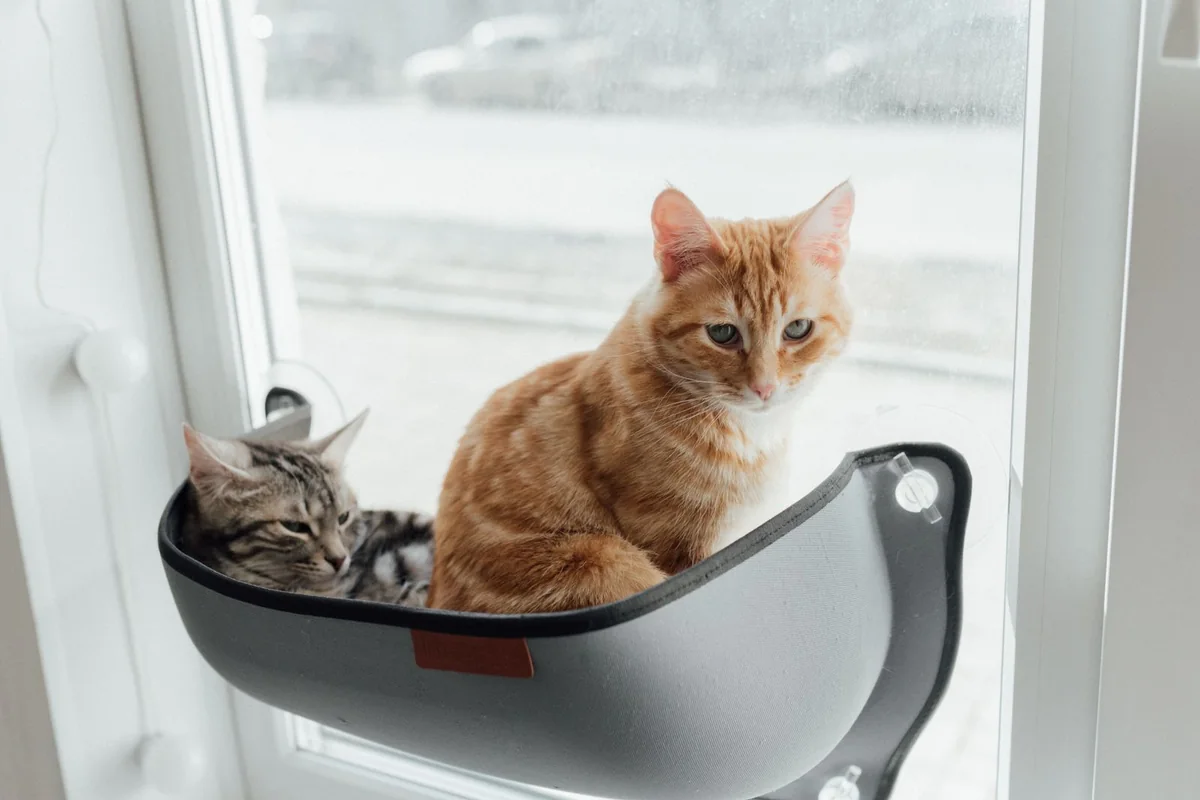
The chair you leave by the window for a single afternoon may become the most contested seat in the apartment. Meanwhile, the cat shelf you carefully ordered can sit untouched for months. Take the chair seriously. Its position, height, surface and angle to the light tell you something about what your cat wanted from that part of the room.
A useful cat window perch is a stable place to rest with a clear view and an easy route down. Start with the place your cat already visits. Watch it at two or three different hours, choose a platform that fits your cat's body, and secure the window separately. Then give the new seat a few ordinary days before deciding how well it works.
Read the window before buying the shelf
From the height of a sitting cat, your good view might turn out to be a drainage pipe or the bottom of a planter. Put your phone camera at roughly the level you are considering. Look for a view with intermittent motion, perhaps a branch that moves on windy days or a patch of courtyard where birds sometimes land. The movement can be interesting without being relentless. An upstairs window can have a good view of the same tree that seems unremarkable from the pavement.
Watch where the light travels, too. That pretty bar of morning sun might turn into a much warmer rectangle around noon. An area that feels pleasant while you make coffee might be too hot through much of the afternoon. Compare the surface itself, the glass and the air near it. Leave another nearby resting spot where your cat can move into shade.
Some windows have a busy world on the other side. Cars with flashing lights, people close to the glass and neighborhood cats can all change the character of the seat. Look for what happens after the cat sees the activity. A quick look followed by grooming, departure or a nap suggests a different experience from long, tight crouching or a rush along the sill whenever an outside cat comes past.
If a particular view keeps your cat on edge, lower a blind partway or put a removable opaque film on the lower part of the pane, following the window maker's guidance. Leave a chair with a calmer view in another room. Those changes can make a difference while preserving light for the rest of the household. For curtains or blinds, secure loose cords out of reach and check that there is nothing dangling beside the platform.
Fit the platform to the body that will use it
Look at your cat sleeping in a favorite spot. Some cats curl into a tight disc, but they still need space to change direction and stretch without leaning against glass. A platform should support all four feet as your cat turns, and it should give the cat room to lie down in a normal position. A narrow windowsill can work as a viewing ledge while a broad chair or bench under it does the better job as a bed.
A wide, stable chair or purpose-made cat tree may give you a chance to try a location before drilling. Follow the instructions for anti-tip hardware and keep climbing furniture anchored if the manufacturer requires it. Check that the surface is firm and provides traction. A thin, washable cover secured so it cannot slide is often easier to maintain than a deep cushion whose edges fold over. Keep the landing clear of table lamps, flowerpots, heaters and cables.
For a mounted platform, find out what is behind the wall finish and use the hardware specified for that installation. Check both the load rating and the platform size. A cat arriving from a jump puts a different load on a shelf than a cat sitting quietly on it. Apartments with uncertain window surrounds or restrictions on drilling are good candidates for a sturdy, freestanding seat. If your setup relies on suction cups, follow the maker's compatibility and inspection guidance. Adhesion can change over time, and a suction perch should never protect an open window or serve as the only barrier between a cat and a fall.
Test the route from both directions. A cat may happily jump from a sofa arm onto a shelf and then hesitate for a long while before jumping down to the floor. A wide intermediate step or a lower viewing seat can help a kitten, older cat or cat that avoids big jumps. Keep the descent visible and uncluttered. If your cat is newly reluctant to jump on seats that were easy before, mention that change to your veterinarian, especially if you also notice stiffness or changes elsewhere in the home.
Treat the window as its own safety project
You can keep the window closed and still have an excellent perch. Ordinary insect screens are intended to keep insects out. They may loosen or pop free when an animal leans on them. A cat watching from a ledge can lunge quickly at a bird or try to squeeze through a gap. The position of the perch may make that access easier than it used to be.
If you open the window for air, secure it with a properly installed, cat-resistant solution suitable for your window type and any relevant building rules. Ask the landlord or an installer before attaching hardware to a frame you do not own. Verify every accessible edge rather than checking the middle of a screen alone. Watch for gaps beside an air conditioner, around sliding panels and near frame corners. Where there is doubt about the barrier, keep the window shut while your cat has access.
Tilt-and-turn windows deserve special attention because an open tilt creates narrowing side gaps. An animal trying to climb through one can become trapped. A seat should never give a cat access to a tilted sash unless suitable guards fully prevent entry and the installation has been checked. Keeping that window closed or keeping the cat out of the room while it is open is a straightforward alternative. Plan that rule for everyone who might open the room to air it, including visitors or pet sitters.
Think ahead to cleaning. Perch covers need washing and the pane may need to be opened or moved. Before you start, move the cat to another secure room with whatever it needs while you work. Replace and inspect any barrier once the job is finished. A perch can remain a comfortable fixture for years, so it helps to make those steps as ordinary as closing the front door.
Give the cat the first review
Set up the seat and go about your day. You can place a familiar, secure mat on it, but avoid lifting the cat onto the platform as a test. Your cat learns more by inspecting the support and making its own way across. A chair that still smells like the household laundry might be more inviting than a new pad with a strong detergent fragrance. Wash textiles with a product you already know your cat tolerates and let unfamiliar furniture air out before it goes in a favored room.
At first, count a pause on the step as information. Perhaps the cat uses the seat only while you are downstairs. Perhaps it looks briefly and heads back to the sofa. Both are plausible versions of success, especially if the main purpose is to offer a choice. On the other hand, a cat that places a foot on an edge and immediately pulls it away may be telling you the surface moves. Creaks, wobble and glare all tend to be easier to spot after spending a few minutes at that height yourself.
In a home with two cats, notice who actually reaches the seat. One cat may wait on the only route down, and the other may simply stop visiting. A second window seat across the apartment often offers more choice than a wider platform that both must approach through the same doorway. You can also vary the elevation and orientation instead of matching the setups exactly. The two cats may already use very different resting heights.
A view of birds can be fascinating. Window watching alone does not give the cat a chance to complete a chase and catch, so keep the other parts of the day intact. A brief floor-level toy session in another part of the room may suit a cat that comes down ready to move. If the view repeatedly leads to frustrated pacing or intense interactions with another pet, close the view for a while and see whether changing the time or angle helps.
What the chair might teach you next
After a week, make one change based on what you saw. If the cat spends its time on the wide base of a tree looking through the lower pane, try a lower pad with the same clear route. If afternoon use drops when sunlight gets strong, shift the seat a short distance or open a second shaded choice. When your cat lies down but startles each time the nearby door opens, place the seat a little farther from the traffic.
A new seat can be useful even when the scenery changes. Bare winter branches admit more light. Traffic picks up when school starts. A chair shifts during a visit and suddenly the preferred way down disappears. Taking thirty seconds to check the view, the temperature and the landing every so often keeps the spot usable far longer than your first careful afternoon of decorating.
You may decide to leave the original chair exactly where your cat found it. If it is stable, the glass is secure, and the cat can sit there in peace, you have already solved most of the problem. The most convincing sign of a good window perch is coming back to find your cat asleep, facing whichever direction it chose.