Before Your Indoor Cat Goes Near the Balcony
Keep an indoor cat safely inside, assess whether a fully enclosed balcony is feasible, and provide outdoor sights even when the door stays closed.
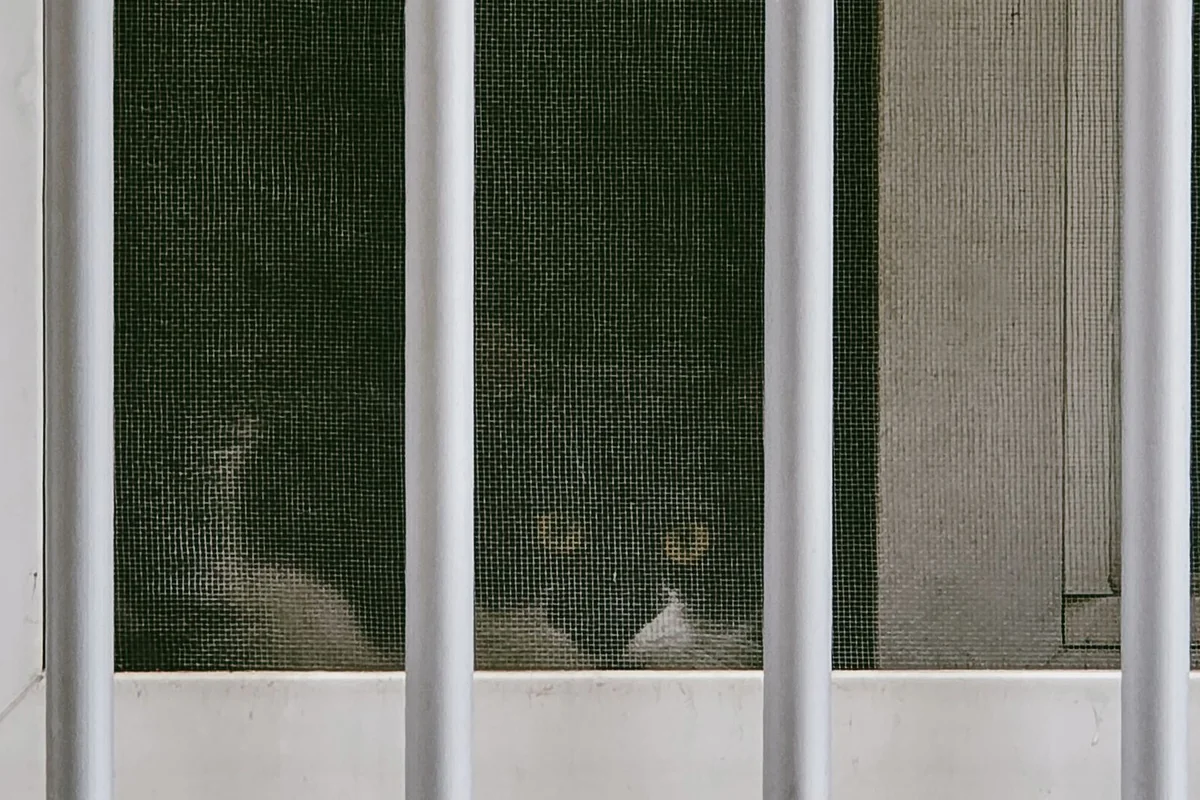
Someone opens the balcony door to bring in a chair cushion, and the cat appears as though it had been waiting just behind the curtain. A door that seemed uninteresting yesterday can become interesting when a draft carries in the smell of rain. Even a cat that normally sits several steps away can reach a threshold faster than a person can close it.
Keep a cat away from an open or partly enclosed balcony. For outdoor access, consider only a fully enclosed setup with a secure roof, edges and door, appropriate approval, and materials installed for the location. If you cannot verify a suitable enclosure, make the indoor side a better place to watch. That works in rented homes, in buildings with restricted access, and on days when outdoor conditions are poor.
Begin on the living-room side of the door
Notice what usually happens when the door opens. A person may need to carry a heavy plant, pass through with both hands full, or step out to check the weather. In each case, attention leaves the doorway for a moment. A household rule that requires everyone to remember the cat while they work around the threshold is easy to forget. A closed interior door between the cat and the balcony is more reliable.
Pick a room the cat already uses. When you need to open the balcony, settle the cat there with access to whatever it needs during that period, close the interior door, and then open the exterior one. Put a small note by the exterior door if visitors or housemates may use it. Make clear who checks for the cat and who closes each door. A note asking people to shut a particular door is easier to act on than a broad reminder about pet safety.
Use a closed pane for an indoor lookout. A chair or stable platform set back from the opening can give your cat a view without making it easier to get through the doorway. Consider the actual route as well as the destination. A large houseplant, a bookcase or the arm of a generous sofa can serve as a staircase. If furniture next to the handle gives the cat a place to wait at waist height, reorganize the furniture or restrict access before you open the door.
Check windows around the balcony separately. An ordinary insect screen and a railing intended for people address different problems from a cat attempting to climb or push through. Where airflow is important, have an installer assess a secure cat-resistant window solution suited to your building. Windows that tilt into the room may create narrow gaps with a trapping risk. Keep those closed or keep the cat away from the accessible window unless a suitable guard fully blocks the hazard.
Learn what the building permits
Start by asking which parts of the balcony you can alter. A lease, heritage restriction, exterior fire rule or shared building policy may govern the railings, façade and ceiling. An enclosure can affect drainage, egress and the way materials behave in wind. If it involves attachments or an outdoor frame, discuss it with the building manager and a qualified installer who can confirm what the structure can support.
The word enclosure has a specific implication here. It means the cat has no usable route over, through or under the boundary, including where a wall and railing meet. A net covering only the lower railing leaves the upper opening accessible. A panel stopping short of the floor can leave a gap where the surface slopes. Decorative lattice may give a cat a foothold. Check how the whole thing works when a pet climbs it or puts its weight against a corner.
The geometry of the balcony can make full protection impractical. An irregular opening under a roofline or inaccessible fixing points above an open edge are examples. Treat those as useful reasons to choose indoor enrichment instead. If a fire door requires a clear route or a shared wall must stay accessible, retain those protections. Have an installer explain the edges that are hard to see from inside and how the enclosure can be serviced without reaching outside the railing.
Choose materials suited to the climate and expected wear. Sun and wind change a fitting over time. Metal can corrode, mesh can tear, and a door with a loose hinge can begin to leave a gap. Ask how long parts are expected to last and how damage shows up. Use materials intended to contain cats in that application, and avoid loose loops, sharp edges, protruding fasteners and equipment that can catch claws. A neat-looking edge that has no proper support can be the first part to fail.
Plan the first test without the cat
Check the completed enclosure before any animal enters it. Go slowly around the floor, roof line, hinges and perimeter. Open and close the entry, and confirm that it latches as intended. Look for gaps from several angles, including along the floor where furnishings can hide part of a seam. Ask the installer to remedy anything questionable before treating the area as secure. Avoid testing an enclosure by seeing whether a cat will try to escape.
Include the equipment you will normally keep on the balcony. A tall chair can bring a cat up to a mesh roof, and a planter can lean against the boundary. Place furniture away from the edges where practical and keep the setup stable. The sit-down area should give the cat a place to rest in shade and a clear route back to the interior. A cat that startles should have room to turn and withdraw without ending up behind stored items.
Think about whether you will supervise even brief visits. The safest routine uses supervision, particularly during the initial period and after work on the building or the enclosure. Have another person watch the cat while you handle doors if the arrangement is complicated. Where a closing door could accidentally trap the cat outside, plan a person-attended route back or another suitable entry the installer has accounted for.
Outdoor conditions change quickly. Metal and tile can get hot. The apparent shade at breakfast can disappear while you are working inside. Skip access during heat, strong wind, storms, smoke or anything that makes the space uncomfortable or hard to supervise. Check after severe weather and after anyone moves objects or carries out maintenance. Do this from a safe position inside the boundaries of the balcony.
Clear little hazards you would miss indoors
Read the names of the plants you actually have. A beautiful arrangement from a shop can contain a plant that is unsafe for cats, and a vase can contain a species you did not expect in the bunch. Remove plants you cannot identify or confirm safe, and keep fertilizers, pesticides and similar products securely stored. Cats can walk through spilled material and then groom it from their paws. Use the label on a product and veterinary advice if an exposure is possible.
Keep drainage routes clear and remove standing water that could collect in a dish beneath a planter. If you offer drinking water, use a steady bowl and maintain it as you would indoors. Put gardening tools and cords away. A dangling strap may attract attention at exactly the time you are doing something else. Keep any household chemicals and cleaners inside in their own cupboard.
An enclosure introduces an unusual version of familiar household sounds. A door along the corridor might make a sharp clap outside. A bird may land at eye level and bring the cat quickly to the mesh. Start with a short visit while you are present and the cat can return indoors at will. See if it investigates and then looks away, or remains tense and alert. Close off the balcony after the cat returns if the experience appears to keep it agitated.
If a cat falls from a height, seek immediate veterinary care even if it looks able to move. Tell anyone who helps to keep exits secure for any other animals and phone ahead when practical. If the cat is out of reach, ask building staff or emergency responders for safe assistance rather than approaching a dangerous edge yourself. Keep your clinic information somewhere easy to find.
If the door stays closed all year
A well-chosen indoor spot can offer a surprising amount of change. Give your cat two places to watch from if you have room, perhaps one with a view of a tree and another looking toward the courtyard. Move a blanket safely away from the doorway and see whether the cat prefers the direction of the morning light or a darker corner after lunch. The balcony is still part of the scenery even when it remains outside the cat's territory.
You can bring in variety with supervised play and new safe places to pause. A cardboard box with sturdy sides and no handles offers a different place to peer out from. An accessible scratching surface lets the cat stretch on the way to the lookout. A partly lowered blind can provide relief when outdoor activity becomes overwhelming. Give the cat a few ways to leave the view and choose a quieter part of the room.
The test of a good arrangement is how it performs on the most ordinary day. A housemate opens the balcony to take in the laundry, the cat is behind a known closed door, and everyone goes back to what they were doing. An indoor seat and a consistent door routine can serve the cat well through all kinds of weather, whether an enclosed outdoor space is possible or the apartment simply has a very good view.