Leave the Cat Carrier Out Before You Need It
Turn a secure cat carrier into a familiar part of the room, practice each step slowly, and prepare for a calmer trip to the veterinary clinic.
Some cats recognize the carrier by its sound. A plastic handle clacks against a lid, and the nearest room suddenly seems empty. It makes sense to the cat. The carrier often appears just when the furniture starts moving and the rest of the day becomes unpredictable. An easy way to change part of that pattern is to let it spend a great deal of time doing nothing at all.
Keep a sturdy carrier open in a place your cat already uses, and let the cat explore it at its own pace. Practice the door, the lift, and short trips as separate events. For an urgent visit, call the clinic and follow its transport guidance. Acclimation is a spare-time project, while getting timely care comes first.
Pick a carrier you can handle easily
Look for a secure cat carrier that supports your cat's weight and gives it space to stand, turn and lie in a natural position. Make sure you can lift it without tilting it sharply or losing your grip on a door latch. A hard carrier with an easily removable top can make some clinic exams easier. A soft carrier may be appropriate if its frame is firm, the closures stay secure, and the cat is unlikely to push or scratch its way through the material.
Examine it on the floor before putting the cat inside. Seat the top correctly and try every clip, latch and zipper. Check the handle and the seams. Look for gaps that a determined animal could enlarge, particularly if the carrier has been handed down or stored for years. If you can open the top, practice removing and replacing it while it is empty. At the clinic, staff can advise when opening it is safe and whether examining your cat in the bottom half is practical.
Put a washable, fitted layer with some traction on the base. A thin pad or piece of familiar bedding can be easier to balance on than a thick folded blanket that shifts sideways. Think ahead about cleaning and consider a spare absorbent liner for the trip. A towel over part of a carrier can reduce overwhelming sights for some cats if plenty of airflow remains. It can also trap heat in warm weather, so check conditions and adjust as needed.
For air travel or a long trip, ask the carrier operator and veterinary team about the route, restrictions and your cat's individual needs. A carrier that works well for a short drive may not meet a transport provider's requirements. Leave enough time to confirm those details before the date of travel. The practice at home can be the same even if the travel logistics are more involved.
Let the empty carrier hold its place
Set it against a wall or beside furniture where it will stay put. Secure the door open or remove it if the manufacturer allows it. An unsecured door that swings and taps the cat during exploration can change the entire experience. For a very cautious cat, offer the base alone if it can sit flat and safely. You can put the top nearby and assemble the carrier later, between sessions.
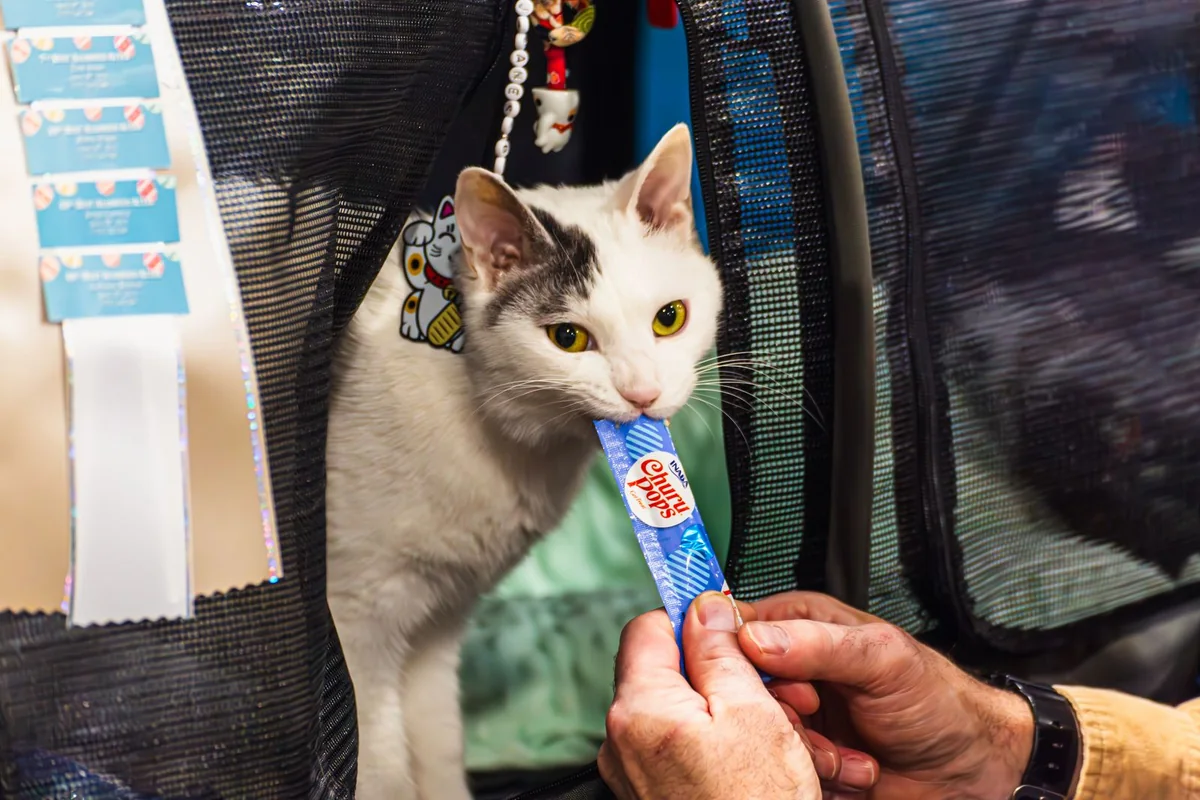
Add a mat that smells and feels familiar. A first treat may go beside the carrier, not inside it. If your cat comfortably collects the treat and spends a moment looking in, try the next one at the threshold. Let the cat step back whenever it wants. You are trying to learn how far it naturally investigates. A food trail into a deep box can put it in a position it would not have chosen.
Notice whether it walks past normally even on days when there is no treat. You may see one paw inside at midday and find the mat rearranged the next morning. If the carrier becomes an ordinary sleeping spot, leave the cat to use it. The right time to practice shutting the door is while your cat is alert enough to opt in and comfortable enough to leave.
Sometimes the room itself is wrong. A carrier in front of the patio door may be bumped throughout the day. One in the middle of the floor has no protected corner. A spot directly under a loud vent may be appealing to nobody. Try a quieter place and compare the cat's tendency to investigate it. Once it finds a regular place, give the household a reason to leave it there.
Make a different game for each motion
First, close and open the door with your cat well outside the carrier so the sound can become familiar. Once the cat enters by choice, move the door slightly and stop. You can reward calm at a comfortable position without closing it. Later, progress to a brief closure and immediate release, with the carrier on the floor throughout. If the cat bolts or refuses to approach next time, return to an easier version and space out the sessions.
A lift is a different experience. Begin by putting your hand on the handle, with your other hand ready to support the base. Once handling the carrier is uneventful, make a gentle, level lift for a moment, put it back down and open it once it is safe. Progress to taking a few quiet steps. Careful movement helps the cat both during practice and on the real trip, when people tend to hurry.
Some cats handle a lift easily but react to the front door or the sound of an engine. Ask what the smallest manageable part of the next step might be. It could be carrying the closed carrier across the hallway and returning. It could be sitting in a parked car briefly before the engine ever runs. In a vehicle, secure the carrier as directed by its maker and keep it away from active airbags. Keep the car comfortable and attended, and avoid opening the carrier in the car or any unsecured space.
Watch for the cat to recover and resume familiar behavior after each practice. If you notice sustained distress, agitation, panting, drooling or motion sickness, stop elective training and talk with your veterinarian. You can ask the clinic what accommodations it offers. A quiet waiting spot, an appointment at a less busy time, or a prescribed pre-visit plan may be helpful for individual cats. Give only medications the veterinarian has directed for your particular cat and trip.
Put trip day on paper
The clinic appointment can begin in a different room from the training sessions. Set out the travel items ahead of time. Have records, a phone, any prescribed medication instructions, and spare cleanup materials ready. Clear a path to the car and tell everyone in the household which doors need to stay shut. If you have help, ask one person to manage doors while the other supports the carrier.
Check the appointment instructions again. A clinic may request a particular meal schedule before a procedure, so use the team's plan instead of routines that helped during practice. Close access to places where a cat might get trapped, and give yourself more time than you think you need. Rushing through the motions can be harder on both the carrier and everyone in the room.
For a cat that walks into the carrier on its own, do what worked in practice, secure the closure and confirm it twice. If you expect difficulty, call the clinic in advance for safe handling advice. Chasing a frightened cat around a room may make loading harder and can cause injuries. A clinic can tailor its advice to the urgency of the visit, the carrier you have and any relevant history.
Leave the carrier closed until you reach an enclosed area where staff confirm it is safe to open. In a waiting room, avoid placing it at ground level next to curious dogs if you have a stable alternative the clinic permits. A covered portion, with ventilation, can give your cat a break from watching the whole room. In an emergency, follow the hospital's directions on arrival rather than relying on your usual appointment routine.
The small reset after you get home
Choose a quiet, secure room for release. Set the carrier down level and open it once the doors are closed and other animals are elsewhere. Let the cat come out in its own time. If there were unusual smells from the clinic, allow space before the cat meets other animals. Check the paperwork and follow the care or monitoring directions the clinic gave you.
Clean up any mess, replace the bedding and put the carrier back where your cat knows it. After a rough drive, you may leave the top off for a while or go back to treats at a distance. It can take a few easy encounters before the cat returns to a previously comfortable stage. Pick a pace by watching what happens in ordinary moments, when nobody is getting ready to leave.
One useful sign that the idea is working comes on an afternoon with no appointment. You hear the edge of the mat shift and find your cat turning around inside the carrier before settling down. The carrier has become a place in the house with a steady floor and a familiar smell. That ordinary experience gives you both something useful to bring to the next trip.