A Low-Key Day Hike Your Dog Can Enjoy
Choose a dog-friendly trail that fits your dog's pace, then plan for shade, water, wildlife, trail etiquette, and an easy turnaround.
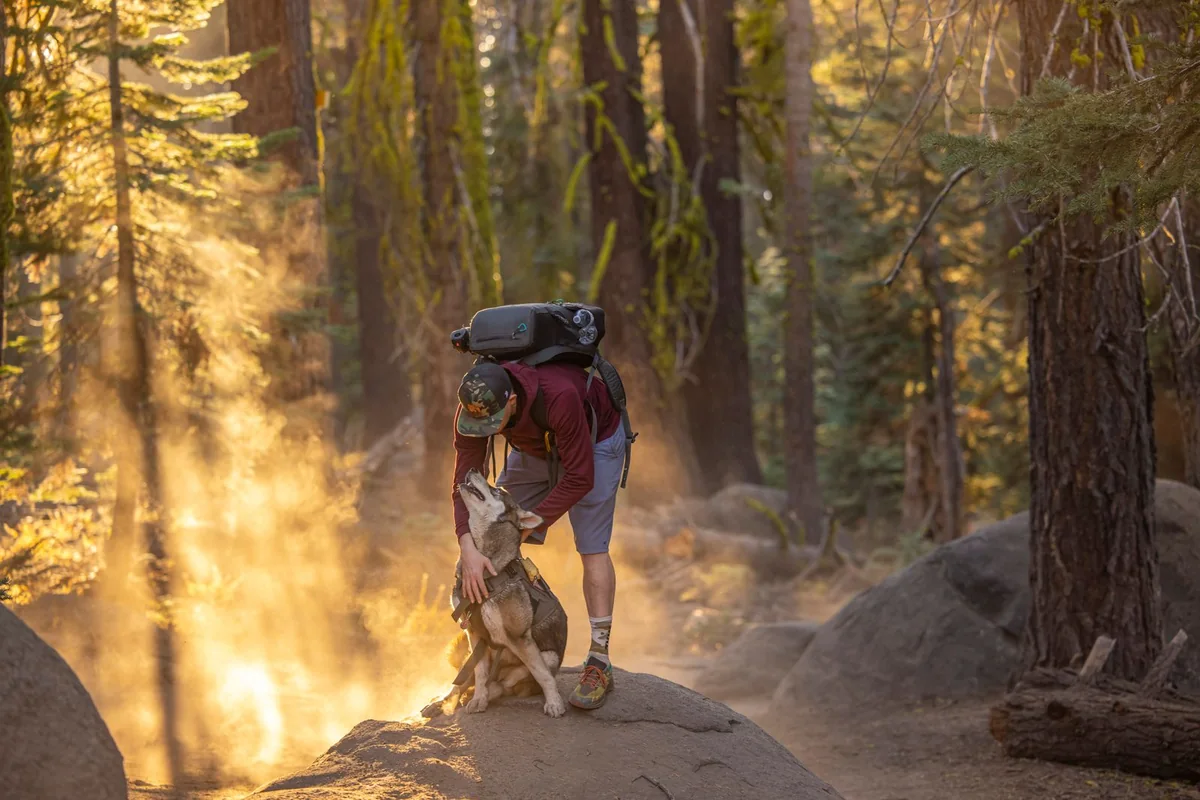
A good outing can end at the first bench. You have seen how your dog handles the climb, checked the water you brought, and taken a few minutes to watch the woods. Going farther is an option you evaluate there. This is a useful approach to a first day hike, when the trail, travel time, and passing strangers add more effort than a normal walk.
Begin with a route your dog has reason to enjoy. Some dogs like quiet scents along a broad trail and find a narrow, busy path stressful. Some tire well before their people. Consider age, health, recent activity, terrain experience, and response to other dogs or wildlife. Ask your veterinarian about appropriate exercise if there are health concerns, a recent injury, or uncertainty about how far your dog should go. A brief local outing can tell you more about fit than a distant summit with few options to turn back.
Pick a trail where changing your mind is easy
Look at the route as a series of surfaces and crossings. Review those conditions alongside the total distance. A gravel lane may offer room to pass. A narrow rock section may force you and your dog into close contact with everyone who comes the other way. Consider stairs, slippery roots, hot pavement near parking areas, deep mud, drop-offs, and places where water covers the route. A moderate elevation number tells you little about the steepest short section or the footing on the way back.
A short out-and-back with several wide places to stop can make a comfortable first trip. Look for a clear starting point, an obvious turnaround, and an alternative nearby if the trailhead is crowded. Account for travel time and stop options outside the trail itself. If the drive and trail together take longer than your dog's usual day away from home, plan a shorter walk. Keep enough daylight, water, and energy to retrace your steps from anywhere you go.
Check the official trail or land manager's information close to departure. Confirm where dogs can go, leash requirements, parking or access rules, and any closures related to weather, habitat, or seasonal conditions. A route may permit dogs on part of the trail and restrict them elsewhere, including at a viewpoint or shuttle. Bring a map you can use offline or a paper copy. Tell someone where you plan to be and when you expect to return, especially where phone coverage is unreliable.
Pack for the whole trip, including the return
Bring more drinking water than you expect to use, a comfortable portable bowl, waste bags, identification, and familiar walking gear that meets local rules. Use a secure, properly fitted collar or harness and a practical fixed-length leash appropriate for the trail. Check that clips move smoothly and that the harness stays clear of chafing points when the dog turns. Take a basic human and pet first-aid kit suited to the hike, know how to use it, and carry veterinary and emergency contact information.
Offer clean drinking water regularly, including before exertion, during breaks, and on the way back as needed. Keep the bowl accessible so taking a drink does not require unpacking everything. Avoid relying on creeks, pools, or ponds, which can present hazards such as fast flow, contaminants, and harmful algal blooms. If the dog needs food on a longer outing, carry familiar portions according to its normal routine and any veterinary plan. A long hike is a poor occasion to test a new product or put an unfamiliar load on the dog.
Carry enough supplies for delays. A leash can break or a water bottle can leak. Have a usable spare if a failure would make the route unsafe. Plan for your dog to be securely restrained in the vehicle and avoid leaving it unattended there. Know how you would get back to the car if the dog could not walk comfortably. A small dog may be transportable with appropriate handling and equipment. For a larger dog, route choice, companions, and advance planning matter because carrying it can be difficult on uneven ground.
Start slowly enough to learn something
Give the dog a short quiet moment at the beginning. A parking area can have moving cars, unfamiliar scents, and excited animals. Secure the leash before the dog leaves the vehicle, find a calmer patch, and see how it moves after the trip. Set a pace that lets the dog explore while maintaining safe control. If the first stretch already demands constant pulling, repeated barking, or contact with people and animals, step aside and consider switching to a quieter route.
Look at ordinary movement during a comfortable stretch. Notice stride, willingness to move on, and how the dog's breathing changes when you pause in shade. Use that information to judge the next section. A dog who keeps taking breaks, falls behind, changes its gait, or seeks shade repeatedly may need an early turnaround. Signs such as weakness, distress, collapse, or concerning breathing in heat require prompt veterinary attention. Stop exertion and seek immediate guidance. Use conservative choices about weather in the first place, especially with dogs more vulnerable to heat or exercise strain.
On an ordinary day, conditions can change between the outward walk and the return. Shade moves. People arrive. A patch of stone warms. If your dog would be uncomfortable crossing the same stretch later, keep the route on the shaded side or head back while the easier option remains available. Turn back before the dog has exhausted its capacity. When the animal still looks able to do more, the remaining walk is your margin for the return.
Make each approach and pass predictable
Keep your dog leashed in accordance with local rules and prevent it from approaching wildlife, other dogs, or people without consent. Scan ahead at corners and narrow passages. Find a broad stable space to stop before a pass, keeping yourself and the dog out of the way. On steep ground, take care where you step aside. A worn shoulder may look wide from a distance and turn out to be a steep drop or sensitive vegetation.
Give people time and space to pass. A short cue your dog already understands, attention with a piece of its ordinary food when suitable, or simply moving farther away can help. If the other walker wants to introduce their dog, choose according to your own dog's comfort and the space available. An easy answer may be to continue along the trail. On an outing with several dogs, leave space between them so they can move without tangling leashes. Keep taking the dog's experience into account even when everyone around you seems friendly.
Follow the trail manager's rules about where to walk, what to pack out, and how to protect wildlife. Pick up waste promptly and carry it with you until you reach an appropriate bin. Keep the dog away from carcasses, bait, plants it may eat, and areas under closure. Give horses, bikes, and other users the space called for by local rules. You will have fewer decisions to make in the middle of an encounter if you know in advance where the wide portions of the trail are.
Decide on a turnaround before the dog needs one
Set an initial turnaround based on time, conditions, and the dog's ordinary activity. For example, start with a short distance to a junction you can identify and allow a break there. Reassess before continuing. Ask how much water remains, whether the return will be hotter or busier, and whether the dog is moving comfortably. If any of those answers are uncertain, walking back is a complete outing. Save the second part for when you know how the dog recovers from the first.
Stop for a brief check in a secure, shaded area where you are clear of other trail users. Look at paws for visible debris or signs of discomfort without forcing handling. Inspect the harness position and offer water. If the dog is reluctant to bear weight, seems unwell, or has an obvious injury, avoid pushing it to complete the walk. Contact a veterinarian for guidance and use the transport plan appropriate to your location. A simple turnaround made early can prevent a small concern from becoming a problem far from help.
Leave a few minutes at the finish before loading the car. Check for debris, burrs, and ticks, and look for changes in movement or skin where gear sits. Ask your veterinarian about appropriate parasite prevention and what to do if you find a tick. Offer water and a comfortable place to rest. Check the dog again after returning home. Limping, persistent discomfort, or other unusual signs after the hike are reasons to consult a veterinarian.
Keep the useful details for next time
Write a brief note on the route that worked. Include trail surfaces, where shade was reliable, and how busy the narrow parts became. Add the point where the dog still had energy for a comfortable return. The detail might be “rested willingly by the stream crossing, then walked back at the usual pace” or “path became busy after the bridge, take the earlier fork next time.” Notes based on the experience will help you choose an outing on a similar day.
A familiar local route leaves room for variety without requiring longer distances. Try a cooler time, a different stopping place, or simply a slower pace near the end. Pick another trail when it offers a good fit and you have checked its conditions. The outing you want to repeat is one where the dog can sniff, pause, and pass people safely, and where the pair of you still have energy left when you reach the car.